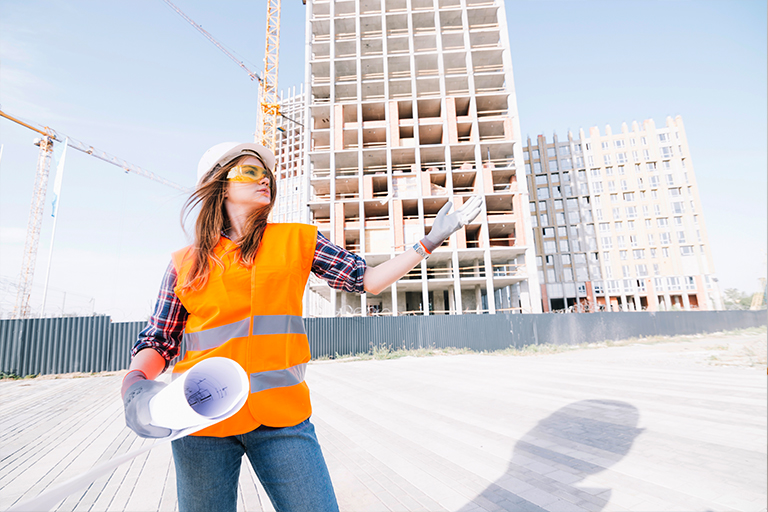
Indian real estate developers are turning to precast technology to deliver projects faster, cleaner and at lower cost. The headline benefits — consistency, speed of construction and value for money — are the same reasons it now powers a growing share of commercial and residential builds across Hyderabad.
Concrete itself has been trusted for centuries for its toughness and aesthetic flexibility. Precast concrete adds a controlled-factory layer on top: components like walls, beams, columns and floors are cast off-site and shipped ready to install. The result is a build process that is safer for crews, gentler on the environment and considerably faster than conventional pour-in-place construction.
What is Precast Technology in Construction?
Precast concrete is a method of construction where concrete is cast in reusable moulds and cured in a controlled factory environment (often called a precasting plant) before being transported to the building site for installation. Structural elements such as concrete frames, walls, floors, staircases and façade panels can all be manufactured this way and assembled on site like a kit.
Because curing happens in a climate-controlled plant rather than open-air construction site, the finished components are dimensionally accurate, free of weather damage and easier to quality-check before they ever reach the site.
Benefits of Precast Construction Technology
Precast offers a stack of advantages that are hard to match with traditional cast-in-place concrete. Here are the ones that matter most for developers, contractors and end users.
Reduced project costs
Precast components are produced off-site, under roof, and shipped ready to install. This compresses project schedules, reduces site safety risks, minimises on-site disturbance and lowers total project costs by needing fewer specialist contractors and a smaller on-site workforce.
Environmental and weather resistance
Precast concrete structures show excellent resistance to fire, natural disasters, insects and mould. Unlike many other building materials, they hold up well against heavy rain, wind damage, earthquakes, termites and decay — which translates into lower long-term maintenance and insurance costs. Precast also handles repeated freeze-thaw cycles better than most alternatives.
Thermal performance
Heating and cooling expenses can be substantially reduced by the thermal mass of precast concrete. The dense material absorbs, stores and slowly releases heat, which helps stabilise indoor temperatures and reduce HVAC load — a real factor in Hyderabad’s climate where summer cooling is a year-round cost.
Low maintenance
A precast concrete structure can be left unpainted without damage to the components. Painting is only required every five to ten years if at all, and precast interiors are less susceptible to wear and easier to clean. That keeps lifecycle maintenance bills predictable.
Acoustic performance
Thanks to the density of concrete, precast structures absorb sound effectively, making them an excellent option for residential apartments and commercial offices where noise insulation matters.
Wi-Fi and signal compatibility
With workplaces increasingly tied to information technology, it’s worth noting that precast buildings do not interfere with radio signals, local Wi-Fi or internet networks. That makes precast one of the most technology-friendly construction materials available — a real consideration for modern Grade A office space.
Auro Realty’s Projects and Precast Technology
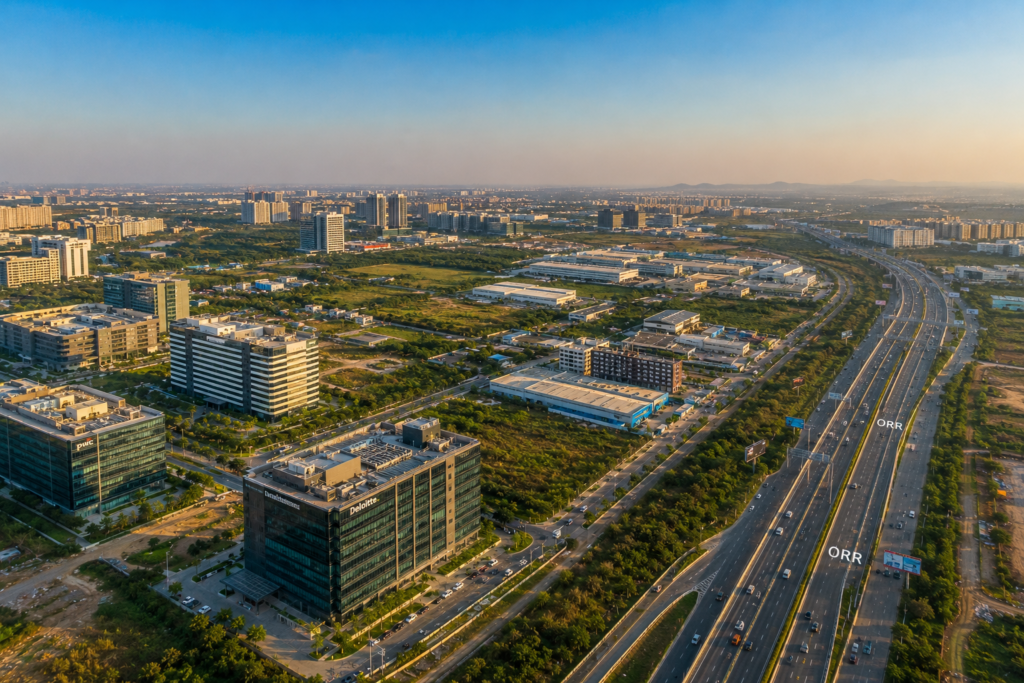
If you’re looking for office space in Hyderabad built to modern standards, Auro Realty’s commercial portfolio is worth a closer look. Auro Galaxy, our flagship commercial project in HITEC City, is built using precast technology — bringing together the speed, structural reliability and finish quality that this method is known for. The same engineering discipline runs through our wider commercial office space portfolio in Hyderabad.
Authoritative Sources Referenced
- RERA Telangana — Project registration verification
- IGRS Telangana — Property registration & stamp duty data
- NHB RESIDEX — Housing price index
- Reserve Bank of India — Home loan rates & housing finance circulars
- HMDA Telangana — Layout approvals & master plan
Data verified by the Auro Realty Team as of March 2026.
Frequently Asked Questions
What is precast technology in construction?
Precast technology involves manufacturing building components like walls, beams, columns, and slabs in a controlled factory environment, then transporting and assembling them on site. This method ensures consistent quality, faster construction timelines, reduced material waste, and better structural strength compared to traditional on-site casting.
What are the advantages of precast concrete construction?
Key advantages include faster construction speed reducing project timelines by 30-50%, superior quality control in factory conditions, reduced labour requirements on site, lower material waste, better fire resistance, excellent durability against weather, and significant cost savings on large-scale projects due to economies of scale.
Is precast construction more expensive than traditional methods?
While initial setup costs may be higher, precast construction is often more cost-effective overall. Faster completion reduces financing costs, factory production minimizes material waste, fewer on-site workers lower labour expenses, and the superior quality reduces long-term maintenance costs. For large projects, precast typically saves 10-20% on total costs.