Retiring early from a job is one thing — staying on track to hit your life goals after that retirement is quite another. Indian life expectancy keeps climbing, which means an early retirement now needs to fund significant milestones (your child’s higher education, weddings, family commitments) on top of two or three decades of regular living expenses.
If you retire in your 40s, you may have another two decades before traditional retirement age and another two-plus after that. Pursuing a second career or a portfolio of investments that generates passive income becomes essential. Below are four investment routes Indian investors typically combine when planning for early retirement.
Best Investment Plans for Early Retirement in India
1. Real estate investments
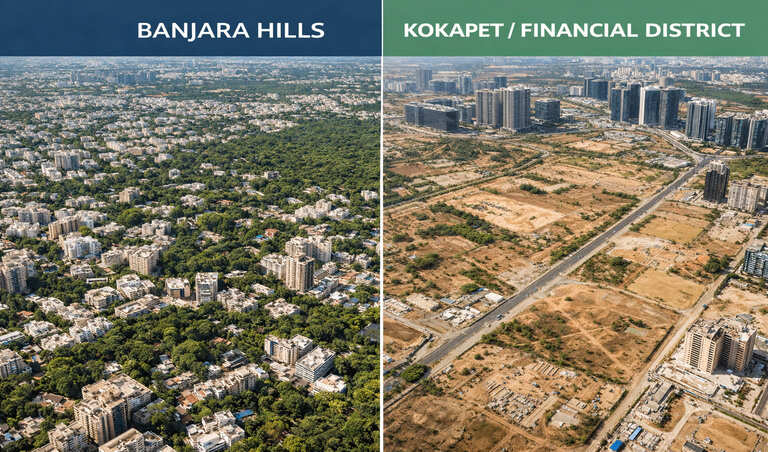
Property is a long-game investment with its share of highs and lows — not the right call for someone trying to make a quick buck, but a strong wealth-building anchor for anyone with a 10-15 year horizon. A young investor in real estate can lock in a stable stream of rental income while building protection against unexpected setbacks. The good news: investing in new residential properties in Hyderabad doesn’t require crores upfront — there are entry-level options across the city’s growth corridors.
If buying within prime city limits feels out of reach today, properties in Hyderabad’s emerging suburbs are typically available at much more accessible prices. As the city expands and Metro lines extend outward, those locations often deliver outsized appreciation. Consider Auro Kohinoor in HITEC City if you’re looking at premium 4 BHK options.
2. Mutual fund investments
Many investors overlook mutual funds when planning retirement, which is a missed opportunity. A Systematic Investment Plan (SIP) lets you invest a fixed amount into a fund of your choice every month, allowing the portfolio to grow steadily while smoothing out short-term market volatility. Over time, regular SIPs build a meaningful corpus thanks to compounding. The conventional rule: stay heavily in equity funds during the early years of your active service, then gradually shift roughly 20% of assets into debt funds each year as you approach your retirement target.
3. Stock market investments
Direct stock investing isn’t for everyone — it’s a higher-risk asset class with no guaranteed returns. The upside is that, over long stretches, Indian equities have historically outperformed every other investment vehicle on an inflation-adjusted basis. To manage the risk, diversify across sectors (banking, IT, FMCG, pharma, infrastructure) and market capitalisations (large-cap, mid-cap, small-cap), and avoid concentrating more than 5–7% of your portfolio in any single stock.
4. Digital gold investments
Digital gold is one of the longest-running investment options Indians have leaned on. Gold has always been part of Indian culture and has historically held its value through multiple economic cycles, with only occasional dips. Digital gold lets you buy and sell fractional quantities online, with no storage worry and no making charges. It’s tax-treated similarly to physical gold but transacts much more easily — making it a useful diversification asset alongside equity and real estate.
Planning for retirement can feel far-fetched when you’re young, but it’s exactly when starting matters most. The earlier you build a multi-asset portfolio across real estate, mutual funds, equity and gold, the more compounding does the heavy lifting — and the more genuine financial independence you have when you reach your golden years.
Official Resources & References
- RERA Telangana — Project registration verification
- GHMC — Greater Hyderabad municipal information
- SEBI — Mutual fund & equity investment regulations
Data verified by the Auro Realty Team as of March 2026.
Frequently Asked Questions
Is real estate a good investment for early retirement?
Yes, real estate is excellent for early retirement planning because it generates passive rental income, appreciates consistently over time, provides tax benefits, can be leveraged through home loans, and serves as a hedge against inflation. Building a portfolio of 2-3 rental properties can create substantial monthly income for retirement.
How much should you invest in real estate for retirement?
Financial advisors recommend allocating 25-30% of your investment portfolio to real estate. For early retirement, aim to own 2-3 income-generating properties that collectively provide rental income covering your monthly expenses. Start investing in your late 20s or early 30s to allow time for appreciation and loan repayment before retirement.
What are the best investment options for early retirement in India?
Top options include residential rental properties in growing cities like Hyderabad, commercial office spaces in IT corridors for higher yields, REITs for liquid real estate exposure, systematic mutual fund investments through SIPs, PPF and NPS for tax-efficient long-term savings, and fixed deposits for stability. Diversification across these is key.