Looking for the best areas to buy property in Hyderabad’s booming property market? In 2026, top real estate hotspots like Patancheru, Kokapet, Tellapur, and Gachibowli offer the best mix of affordability, ROI, and infrastructure growth. Backed by IT expansion and ORR connectivity, these areas are driving 12–15% annual appreciation — making Hyderabad India’s most promising real estate investment destination.
Hyderabad has emerged as India’s hottest real estate market, powered by robust IT growth, metro expansion, and world-class infrastructure.
Whether you’re a homebuyer or an investor, 2026 brings new opportunities to secure properties in high-appreciation zones — from affordable townships to luxury enclaves.
Here’s a curated list of the Top 7 areas to invest in Hyderabad, with insights on ROI, lifestyle, and nearby Auro Realty developments that exemplify smart real estate choices.
This guide is curated by the Auro Realty editorial team based on HMDA development data, RERA registration trends, and market analysis from leading property consultants. All appreciation figures are based on historical price trends and projected infrastructure timelines. Data references include Knight Frank India Real Estate Report and HMDA development plans.
Hyderabad Real Estate Market Overview 2026
Hyderabad’s residential real estate market continues to outperform other major Indian metros in 2026, cementing its status as one of the best areas to buy property in Hyderabad for long-term wealth creation. The city recorded over 42,000 residential unit registrations in the first half of the year, reflecting sustained buyer confidence. Average property prices across the city have risen approximately 14% year-on-year, with western corridor micro-markets such as Patancheru, Kokapet, and Tellapur leading the charge.
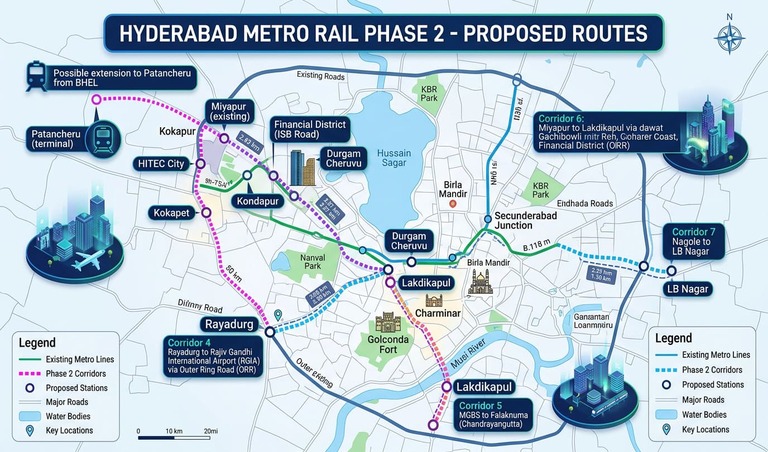
Several macro factors underpin this growth. The Telangana government’s proactive infrastructure investment, including the Regional Ring Road (RRR) project and Metro Phase 2 expansion, has unlocked new residential corridors. Meanwhile, Hyderabad’s IT and pharma sectors continue to attract skilled professionals, sustaining rental demand across established and emerging neighborhoods alike.
For investors and homebuyers evaluating where to deploy capital in 2026, understanding each micro-market’s price trajectory, connectivity advantages, and development pipeline is critical. The following analysis covers the top 7 areas based on a combination of appreciation potential, rental yields, lifestyle infrastructure, and upcoming development catalysts.
Best Areas to Buy Property in Hyderabad: Top 10 Picks for 2026
1. Patancheru – The Fastest Growing Affordable Hub
Why Invest: Located along the Outer Ring Road (ORR) and NH65, Patancheru is rapidly transitioning from an industrial suburb to a modern residential and commercial zone.
Highlights:
- Excellent connectivity to BHEL, Lingampally & Financial District
- Close to IT & Pharma job clusters
- Affordable 2BHK and 3BHK options for first-time buyers
- Ongoing infrastructure upgrades by HMDA
Local Development Spotlight: Auro Realty’s Kohinoor and The Office projects in Patancheru are transforming the area into a self-sustained residential & commercial ecosystem, ideal for investors seeking long-term returns.
ROI Potential: 13–15% annual appreciation expected by 2026
Average Price Range (2026): Apartments in Patancheru currently range from ₹4,800–₹7,200 per sq ft, offering the best entry point among western corridor locations. Prices along NH65 have increased approximately 25–30% over the past two years.
2. Kokapet – The New Luxury Investment Destination
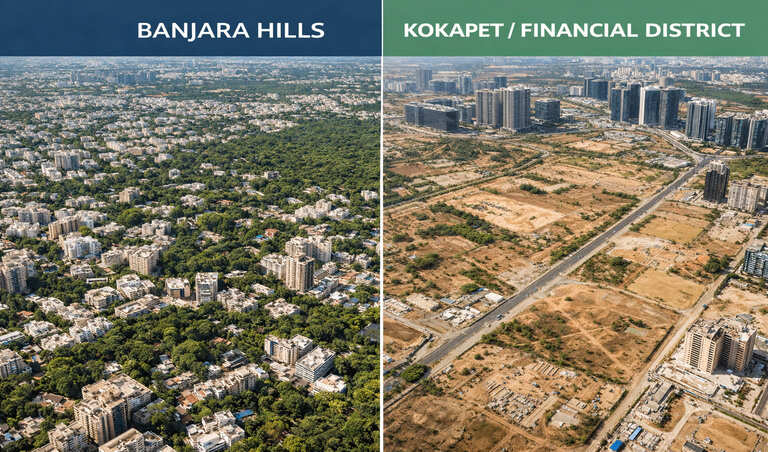
Why Invest: Known as the “next Gachibowli”, Kokapet is Hyderabad’s most premium real estate corridor on the western edge of ORR.
Highlights:
- Excellent proximity to Financial District and Airport
- Multiple under-construction IT parks and Grade-A offices
- Growing luxury apartment segment
- Infrastructure push via Neopolis and Kokapet SEZ
Ideal For: High-income professionals, NRIs, and investors seeking luxury apartments in Hyderabad with assured rental demand.
ROI Potential: 12–14% YoY growth; rental yields between 4–6%.
Average Price Range (2026): Premium apartments in Kokapet range from ₹9,000–₹15,000 per sq ft, with luxury projects exceeding ₹18,000 per sq ft. Land values along the ORR corridor have appreciated significantly since Kokapet SEZ announcements.
3. Gachibowli – The IT Hub with Consistent Rental Demand
Why Invest: As Hyderabad’s original IT nucleus, Gachibowli offers steady property value and strong rental ROI.
Highlights:
- Home to Microsoft, Amazon, TCS, and Capgemini
- Close to HITEC City, Financial District, and international schools
- Gated community apartments with premium amenities
Investor Advantage: Flats in Gachibowli command 15–25% higher rentals compared to other suburbs — ideal for investors targeting consistent income streams.
ROI Potential: 10–12% YoY
Average Price Range (2026): Gachibowli commands premium pricing of ₹8,500–₹14,000 per sq ft. Rental yields remain strong at 3.5–5%, with 2BHK apartments renting for ₹22,000–₹35,000 per month near IT campuses.
4. Tellapur – Emerging Residential Corridor near Financial District
Why Invest: Tellapur is Hyderabad’s newest residential hotspot, benefitting from proximity to Gachibowli and Tellapur Railway Station.
Highlights:
- Premium integrated townships
- Seamless ORR connectivity
- Close to leading schools & IT zones
- Future-ready infrastructure for long-term value
Ideal For: Young professionals and families looking for a gated community living near the Financial District.
ROI Potential: 12–14% appreciation with strong mid-segment buyer demand.
Average Price Range (2026): Property rates in Tellapur range from ₹6,800–₹10,000 per sq ft for premium integrated townships. The area has seen approximately 30% price growth over the past three years as infrastructure has matured.
5. Nallagandla – Family-Friendly IT Suburb
Why Invest:
Nallagandla sits strategically between Tellapur and Gachibowli, offering a perfect mix of affordability, livability, and location.
Highlights:
- Close to Lingampally railway and metro stations
- Popular among IT families and first-time buyers
- Surrounded by supermarkets, healthcare & schools
Property Type: 2–3 BHK mid-luxury apartments and ready-to-move flats dominate the segment here.
ROI Potential: 10–12% annual growth with strong end-user demand.
Average Price Range (2026): Nallagandla apartments average ₹6,500–₹9,000 per sq ft. The area offers a strong rental market with 2BHK units fetching ₹16,000–₹24,000 per month, driven by steady IT professional demand.
6. Miyapur – Connectivity and Mid-Segment Growth
Why Invest: Located on the Hyderabad Metro Red Line, Miyapur combines affordability and convenience.
Highlights:
- Excellent connectivity to Kukatpally, Hitech, and ORR
- Rapid civic and retail development
- Popular among working professionals and young families
Ideal For: Buyers seeking flats for sale in Hyderabad under ₹1 crore in an emerging, well-connected locality.
ROI Potential: 9–11% annual growth, with increasing rental appeal.
Average Price Range (2026): Property prices in Miyapur currently average ₹5,500–₹7,500 per sq ft, making it one of the most affordable metro-connected areas. Monthly rentals for 2BHK apartments range from ₹14,000–₹20,000.
7. Jubilee Hills & Banjara Hills – The Ultra-Luxury Zone
Why Invest: These iconic neighborhoods remain Hyderabad’s most prestigious addresses, blending opulence, connectivity, and exclusivity.
Highlights:
- High-end bungalows, luxury apartments & celebrity residents
- Close to top schools, hospitals, and entertainment zones
- Ultra-premium real estate with limited inventory
Ideal For: HNIs, NRIs, and investors prioritizing luxury real estate in Hyderabad for capital preservation and legacy value.
ROI Potential: 8–10% annual capital appreciation; high resale liquidity.
Average Price Range (2026): Luxury apartments in Jubilee Hills and Banjara Hills range from ₹12,000–₹25,000 per sq ft depending on the project and location. Standalone bungalows and ultra-premium villas command significantly higher per-unit pricing due to limited land availability.
8. HITEC City – The IT Powerhouse with Premium Rental Returns
Why Invest: HITEC City is Hyderabad’s flagship IT corridor, home to Microsoft, Google, Amazon, and 1,500+ tech companies. This creates a massive captive tenant pool of high-earning professionals, making it one of the strongest rental yield markets in the city.
HITEC City Rental Yield & IT Demand Highlights
- 3–5% rental yield – among the highest in Hyderabad
- 54% rental value growth and 62% capital appreciation between 2021–2024
- 3BHK apartments command ₹40,000–₹60,000 monthly rent
- Metro Phase 2 (2027 completion) expected to drive 22% additional appreciation
Ideal For: Investors seeking premium rental income backed by IT sector employment. Also suits NRI investors looking for hands-off rental properties with strong occupancy rates.
ROI Potential: 10–15% annual growth, with office rentals up 9% in early 2026.
Average Price Range (2026): Property prices in HITEC City average ₹11,000–₹15,900 per sq ft. 2BHK apartments rent for ₹25,000–₹35,000 per month, while 3BHK units fetch ₹40,000–₹60,000.
9. Kondapur – The IT Suburb with Strong Appreciation & Family Appeal
Why Invest: Kondapur sits at the intersection of HITEC City, Gachibowli, and the Financial District, giving it spillover demand from all three employment hubs. With luxurious gated communities, top-rated schools, and excellent social infrastructure, it attracts both families and working professionals.
Kondapur Property Appreciation & Livability Highlights
- 21% annual price growth with average rates at ₹8,700–₹12,700 per sq ft
- 56.3% price appreciation over 5 years
- 4–5% rental yield driven by IT professional tenant demand
- Top schools, hospitals, and retail within 2–5 km radius
Ideal For: Families and end-users looking for premium gated community living near IT hubs. Also attractive for investors targeting steady 4%+ rental yields with strong capital appreciation.
ROI Potential: 10–12% annual growth, with consistent demand from HITEC City and Gachibowli workforce.
Average Price Range (2026): Apartments in Kondapur range from ₹8,700–₹12,700 per sq ft. Land rates in the area are ₹1,00,000–₹1,50,000 per sq yd. Monthly rentals for 2BHK units average ₹18,000–₹28,000.
10. Khajaguda – Emerging Luxury Pocket near Financial District
Why Invest: Khajaguda is a fast-growing residential pocket in Hyderabad’s western corridor, positioned between Gachibowli and the Financial District. Its proximity to ISB, University of Hyderabad, and major IT campuses makes it a quiet yet well-connected alternative to the more saturated neighbouring areas.
Khajaguda Growth Drivers & Infrastructure Highlights
- 53.8% price appreciation over 5 years, 120.7% over 10 years
- RERA-compliant projects in Khajaguda command 12–20% higher resale values
- Proximity to ORR, Financial District, and Nanakramguda IT cluster
- Growing luxury and ultra-luxury project launches attracting premium buyers
Ideal For: Buyers looking for emerging luxury residences near the Financial District at prices lower than Gachibowli or Jubilee Hills. Strong option for long-term capital appreciation.
ROI Potential: 8–12% annual growth, with RERA-compliant projects outperforming the micro-market average.
Average Price Range (2026): Property prices in Khajaguda average ₹8,500–₹11,650 per sq ft. Gated community projects range from ₹70 lakh to ₹4.24 crore depending on configuration and amenities.
Why These Areas Are Hotspots in 2026
Hyderabad’s property market is backed by strong economic fundamentals and massive infrastructure projects, making it one of India’s safest and highest-growth investment destinations.
Key Growth Drivers:
- Job Creation: New IT and pharma parks driving employment
- Infrastructure Expansion: Metro Phase 2, ORR widening, and airport connectivity
- High ROI: Average property appreciation of 12–15% YoY
- Government Support: Telangana’s pro-investor policies attract global developers
Fact: According to Knight Frank’s 2024 report, Hyderabad ranked #1 in residential price growth among major Indian metros.
How to Choose the Right Area for You
Selecting the right investment zone depends on budget, purpose, and timeline.
| Factor | Ideal Choice |
| Budget-Friendly Investment | Patancheru, Miyapur |
| Luxury Lifestyle & ROI | Kokapet, Jubilee Hills |
| Rental Income Focus | Gachibowli, Tellapur |
| Long-Term Appreciation | Patancheru, Nallagandla |
2026 Price Comparison: All 7 Areas at a Glance
| Area | Avg. Price (₹/sq ft) | Annual Appreciation | Rental Yield | Best For |
| Patancheru | 4,800–7,200 | 13–15% | 3–4% | Budget investors, first-time buyers |
| Kokapet | 9,000–15,000 | 12–14% | 4–6% | NRIs, luxury seekers |
| Gachibowli | 8,500–14,000 | 10–12% | 3.5–5% | Rental income, IT professionals |
| Tellapur | 6,800–10,000 | 12–14% | 3–4.5% | Young families, mid-segment growth |
| Nallagandla | 6,500–9,000 | 10–12% | 3.5–4.5% | Family living, end-users |
| Miyapur | 5,500–7,500 | 9–11% | 3–4% | Metro-connected affordability |
| Jubilee Hills / Banjara Hills | 12,000–25,000 | 8–10% | 2–3% | Ultra-luxury, legacy assets |
Note: Price data is indicative and based on market trends reported by leading property consultants and Telangana Registration Department data. Actual prices may vary based on specific project, floor, and amenities.
Quick Tips for Smart Buyers:
- Evaluate connectivity & upcoming infra projects
- Prefer gated communities with strong builder reputation
- For best returns, choose developer-backed projects like Auro Realty in growth corridors such as Patancheru
Next Steps: Before finalizing any property investment in Hyderabad, verify the builder’s RERA registration, review HMDA layout approvals, and compare price trends across multiple localities. Working with RERA-registered developers who have a proven delivery track record in your chosen area can help reduce investment risk.
Key Takeaways for Property Buyers in 2026
Hyderabad’s real estate market in 2026 rewards informed decision-making. Understanding the best areas to buy property in Hyderabad requires evaluating each micro-market on its own merits. The western corridor (Patancheru, Kokapet, Tellapur, Nallagandla) offers the highest concentration of growth catalysts, while established hubs like Gachibowli provide defensive rental income. Budget-conscious investors should look at Patancheru and Miyapur, while those seeking premium exposure may find Kokapet and Jubilee Hills more aligned with their objectives. Regardless of the area, prioritize RERA-registered projects, verify HMDA approvals, and align your investment horizon with the area’s infrastructure development timeline for optimal returns.
Editorial Disclosure: This article is published by Auro Realty’s editorial team. While Auro Realty develops projects in some of the areas mentioned, this guide aims to provide objective market analysis for all buyers. Readers are encouraged to conduct independent due diligence before making investment decisions. Last reviewed and updated: March 2026.
Related Reading
- Living Expenses in Hyderabad: What It Really Costs
- Hyderabad’s Golden Triangle: Gachibowli, HITEC & Kondapur
- Best Locations to Buy Plots in Hyderabad
- Rental Yield in Hyderabad 2026: HITEC & Kondapur
- Banjara Hills Property Rates: Hyderabad’s Elite Zip Code
Frequently Asked Questions
What are the top 7 property investment hotspots in Hyderabad?
The top 7 investment hotspots in Hyderabad for 2026 are Patancheru for affordable growth along ORR and NH65, Kokapet as the new luxury corridor near Financial District, Gachibowli for consistent IT-driven rental demand, Tellapur as an emerging residential hub near Financial District, Nallagandla for family-friendly mid-segment living, Miyapur for metro-connected affordability, and Jubilee Hills and Banjara Hills for ultra-luxury capital preservation.
Which area offers the highest appreciation potential in Hyderabad?
Patancheru currently leads appreciation potential at 13 to 15 percent annually, driven by ORR connectivity and rapid commercial development. Kokapet follows closely at 12 to 14 percent year-on-year growth, fuelled by proximity to Financial District and premium IT office supply. Tellapur also offers 12 to 14 percent appreciation with strong mid-segment buyer demand as infrastructure near Gachibowli continues to develop.
How much capital do you need to start property investment in Hyderabad?
Entry-level apartment investment in Hyderabad starts from around 50 to 70 lakh for 2BHK units in affordable growth corridors like Patancheru and Miyapur. Mid-segment options in Nallagandla and Tellapur range from 80 lakh to 1.2 crore. Premium investments in Kokapet and Gachibowli start from 1.2 crore upward, while ultra-luxury properties in Jubilee Hills and Banjara Hills command significantly higher budgets. With a 20 percent down payment and home loan, buyers can start with 10 to 15 lakh for an affordable apartment.
Is Hyderabad a good city for real estate investment in 2026?
Yes, Hyderabad is one of India’s strongest real estate investment destinations in 2026. The city offers an average annual property appreciation of 12 to 15 percent, driven by robust IT sector expansion, Metro Phase 2 development, ORR widening, and Telangana’s pro-investor government policies. According to Knight Frank’s India Real Estate Report, Hyderabad ranked number one in residential price growth among major Indian metros.
What factors should I consider when choosing a property investment area in Hyderabad?
Key factors include proximity to IT employment hubs like HITEC City and Financial District, connectivity via ORR, metro, and upcoming infrastructure projects, the reputation and RERA registration of the builder, rental yield potential for investment properties, and upcoming civic developments such as Metro Phase 2 expansion. Budget-friendly options include Patancheru and Miyapur, while Kokapet and Jubilee Hills cater to luxury and high-net-worth investors.