Remote work was treated as a temporary arrangement in 2020. Five years later, hybrid is the default for India’s white-collar economy and the real estate map has been redrawn quietly underneath it. Office demand has not collapsed; it has reorganised. Home-buying preferences have shifted in ways that show up in floor plans, not just headlines. And the suburban thesis has finally caught up to where the workforce actually lives.
Here is what has actually changed in Indian real estate because of remote and hybrid work, with a Hyderabad lens where it matters.
1. Larger homes are non-negotiable now
The biggest shift is the most obvious. Buyers who would have happily considered a 1,200 sq ft 2BHK in 2019 are looking at 1,600 to 2,000 sq ft today, almost always with a dedicated workspace built in. Three-bedroom configurations have overtaken two-bedroom as the volume seller in Hyderabad’s premium segment, driven entirely by the need for a study or home-office room that does not double as a guest bedroom.
2. The home office is now a design requirement
Developers are responding. New launches in Hyderabad routinely show one of the bedrooms designed specifically as a study with built-in desk niches, dedicated power and data points, and acoustic separation from the living room. Buyers are checking for natural light, ventilation, and door placement before they look at the kitchen. The spare room is no longer spare.
3. Suburbs and peripheral corridors are pricing in
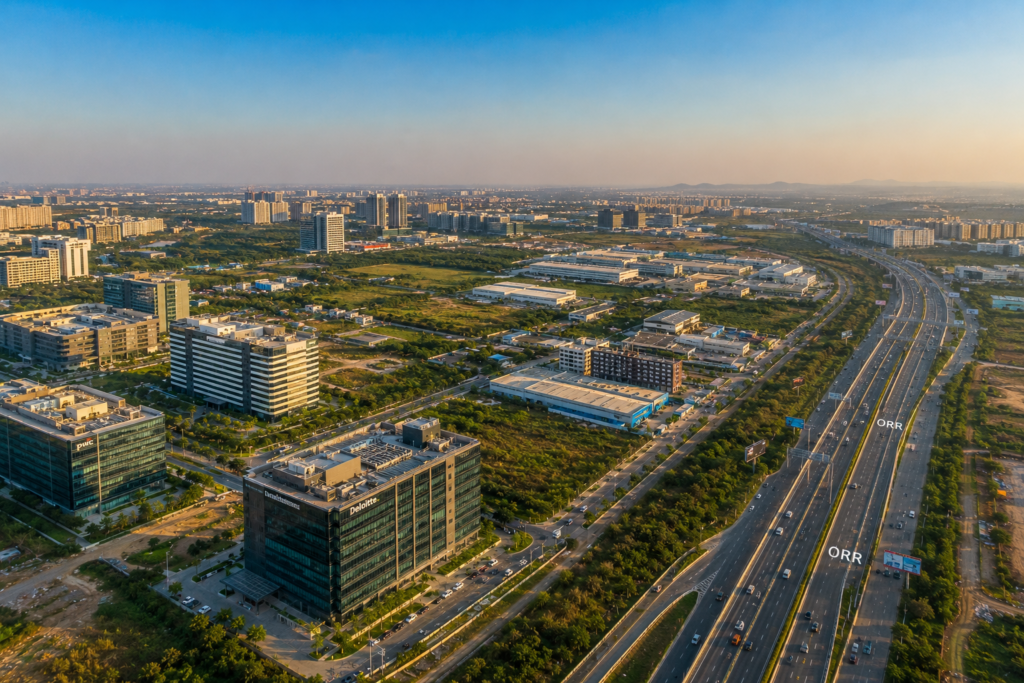
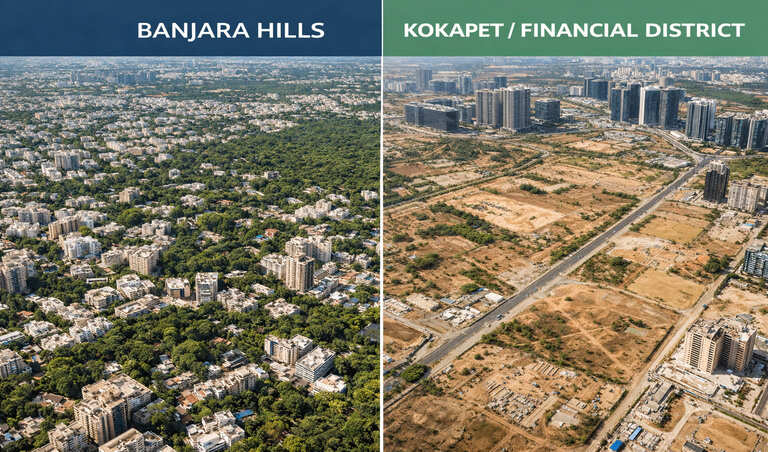
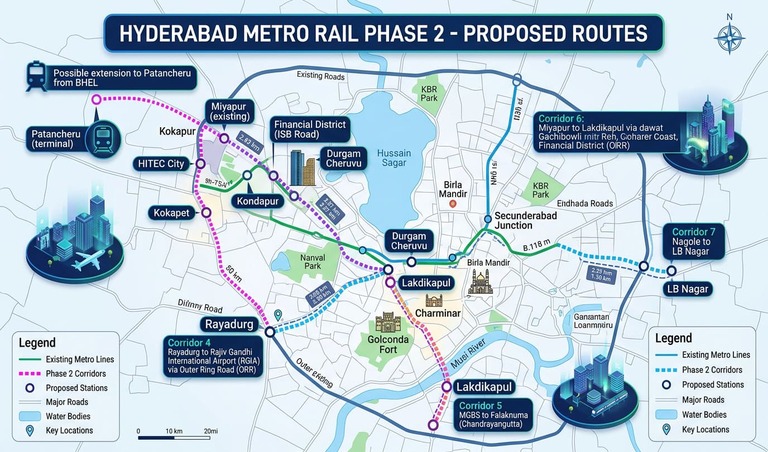
When commute frequency drops from five days to two or three, the calculus on distance changes. Hyderabad has seen this play out clearly along the ORR, in Kondapur, Tellapur, Kollur, and the Patancheru belt. Buyers who priced themselves out of central Gachibowli are now choosing larger, better-built homes 8 to 12 kilometres further out and using the saved budget on lifestyle. The premium for being a kilometre from the office has compressed.
4. Office demand has shifted, not vanished
The narrative that hybrid would crush commercial real estate has not held in India. Hyderabad absorbed record office space in 2024, but the nature of demand changed. Larger floor plates with collaboration zones, smaller footprints from companies that had over-leased pre-pandemic, and a sharp rise in flexible and managed workspace operators are the three visible patterns. Commercial leasing trends covers this shift in detail.
5. Tier-2 cities are getting a real look
Permanent remote roles have unlocked genuine demand in Vijayawada, Vizag, Coimbatore, Indore, and Kochi. These are not vacation purchases. They are first homes for professionals who can now work for Bengaluru or Hyderabad employers from their hometown. The price gap is wide enough that buyers can own a 3BHK outright in a Tier-2 city for the down payment on a 2BHK in a metro suburb.
6. Amenities have been rewritten
The amenity set that mattered to a buyer in 2019 was clubhouse, pool, gym. The amenity set that matters in 2025 includes co-working lounges inside the gated community, fast and reliable building-wide internet, conference and meeting rooms residents can book, larger green spaces because people are home during weekdays, and proper food and grocery access on-site. Integrated townships have benefited from this directly.
7. Rental yields and tenant profile have shifted
Rental demand for compact 1BHK units near IT parks softened in the early hybrid years. It has since recovered but with a different tenant: younger professionals who want flexibility, not five-day commute proximity. Larger 2BHK and 3BHK rentals in suburban locations have outperformed because hybrid families need the space and are willing to pay for it.
8. The integrated township thesis is finally validated
Integrated townships were a slow-selling category before 2020. They are now one of the most resilient. A buyer who works from home three days a week genuinely uses the school, the retail, the health centre, and the open green spaces. Sansa County in Hyderabad is built on exactly this premise: the home is part of a larger, walkable ecosystem that supports a full week, not just evenings and weekends.
What this means for buyers in 2025
If you are buying a home today and your work is hybrid or remote, optimise the floor plan first and the location second. A larger home in a well-planned suburb usually beats a compressed home in a central location once you account for how many hours a week you will actually spend at the desk inside it. The math is simple, but it is genuinely new.
How has remote work changed home-buying preferences in India?
Buyers are choosing larger homes, almost always with a dedicated study or home-office room. Three-bedroom configurations have overtaken two-bedroom as the volume seller in premium Hyderabad segments, and suburban locations have gained at the expense of central, commute-driven micro-markets.
Did remote work hurt commercial real estate in India?
Not in the way the global narrative suggested. Hyderabad absorbed record office space in 2024. Demand reorganised toward larger collaboration-friendly floor plates, smaller footprints from over-leased tenants, and a sharp rise in flexible and managed workspace operators.
Are suburbs better investments than central locations now?
For end-users on hybrid schedules, suburban homes often deliver more value per rupee. The premium for being a kilometre from the office has compressed because commute frequency dropped from five days to two or three. Strong corridors like Kondapur, Tellapur, and Kollur in Hyderabad reflect this shift clearly.
What amenities matter most for hybrid workers in residential projects?
Co-working lounges inside the community, building-wide reliable internet, bookable meeting rooms, larger green spaces for weekday use, and on-site food and grocery access. Integrated townships have benefited the most because they support a full working week, not just evenings.