The pandemic taught a lot of households a hard lesson about open-plan living: a beautiful continuous space is also a space where nothing can happen privately. The home-office overlapped with the dining table, the workout overlapped with the living room, and the child’s online class overlapped with everything. The fix is not necessarily a bigger home. It is a smarter one, with dedicated activity zones built into whatever footprint you already have.
Here is how to design activity-specific spaces inside an Indian apartment, even when square footage is tight.
1. Identify the activities that actually compete
Before you rearrange anything, list every recurring activity in the home over a normal week: weekday work calls, school online sessions, workouts, hobbies, meals, entertainment, sleep, prayer, and quiet reading. Mark which ones happen at the same time of day. The conflicts on that list are the only ones you need to design around. Most homes have four or five real conflicts, not twenty.
2. Build a dedicated work zone, even a small one
The home office does not need a separate room. It needs separation. A desk built into a balcony alcove, a corner of the master bedroom with a folding screen, or a wall-mounted desk in a passage can all work if the space gets natural light, a stable internet point, and the ability to close a visual or acoustic boundary during calls. The mental switch into and out of work is what matters.
3. Carve out a children’s study zone
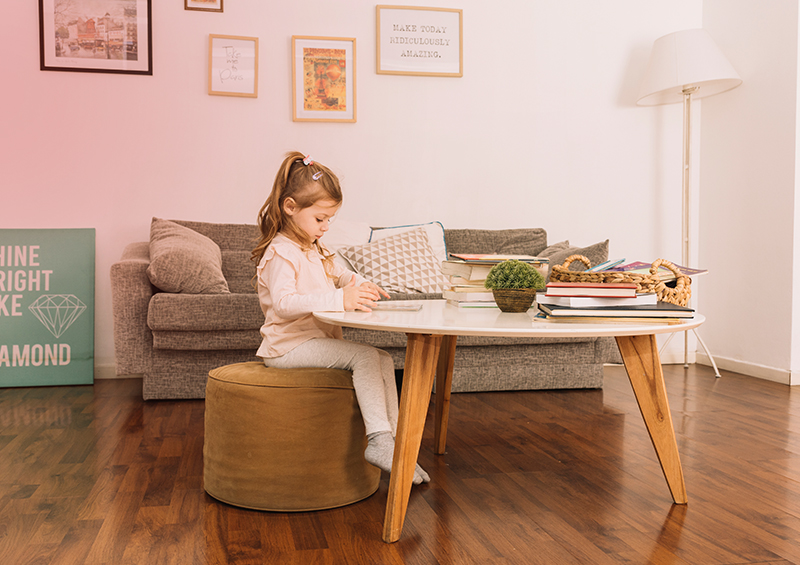
A child working in the living room with a tablet is not studying; they are negotiating with the television. The simplest fix is a desk in their own bedroom positioned to face a wall, not a window or door. If two children share a room, two desks at right angles work better than two desks side by side. Add storage above the desk for books and supplies so the surface stays clear.
4. A workout corner, not a home gym
Most home workouts need a 6 ft by 6 ft mat space, a yoga mat, a set of dumbbells, and a wall to anchor a resistance band. That is it. A balcony, the foot of the bed, or even a cleared section of the living room works. The mistake is buying a treadmill that takes up a 4 ft by 7 ft footprint and ends up holding laundry within a year.
5. A quiet reading or meditation corner
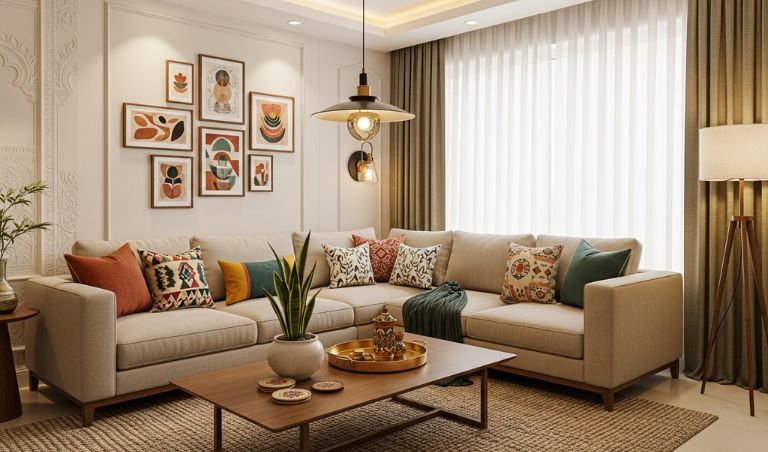
This is the easiest zone to create and the most underrated. A single comfortable chair, a small side table, a reading lamp, and a wall to face. Place it away from the television and the kitchen, ideally near a window with morning light. A pooja room can serve double duty here.
6. Hobby and craft zones
Painting, music, sewing, model-building, and other hobbies need a surface that does not have to be cleaned and reset every evening for dinner. A small fold-down table mounted on a wall, a corner of the dining area with dedicated drawer storage, or a converted utility nook all work. The trick is keeping the tools visible and accessible. Hobbies that are packed away tend to die.
7. The entertainment zone needs intentional limits
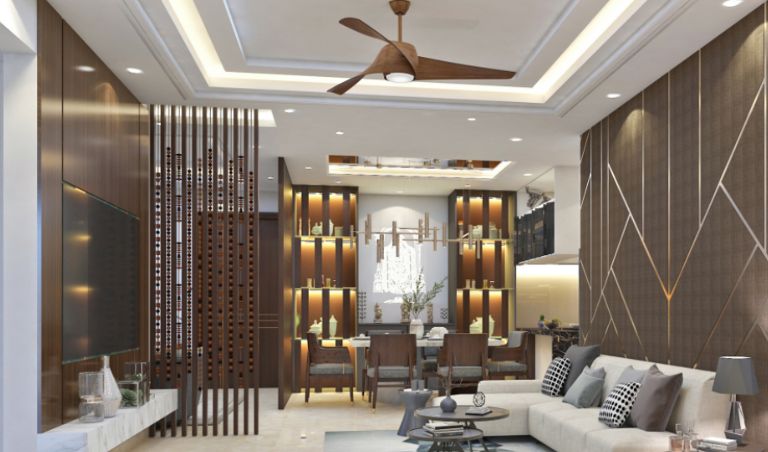
The living room television tends to expand in influence until it dominates the entire space. Counter this by giving entertainment a specific seat and a specific time. Anchor the television to one wall, position seating to face it without crowding the rest of the room, and keep the dining area visually distinct so meals do not become screen time by default.
8. Use light, sound, and rugs to define zones without walls
You do not need partitions to create separate zones. A rug under the desk separates work from living. A pendant light over the dining table separates eating from lounging. A bookshelf placed perpendicular to a wall creates a reading nook on one side and a workspace on the other. A small white-noise machine or a soft music speaker in the work zone masks household sound during calls. These cues do most of the work that walls used to do.
9. Storage is the hidden requirement
Every activity zone needs storage close to it. Work zone needs files and chargers. Workout corner needs mats and weights. Hobby zone needs supplies. Reading zone needs books. The activity zone fails the moment its tools have to be carried in from another room every time. Built-in vertical storage on adjacent walls is almost always the answer in Indian apartments.
10. Plan for the home you will have in three years
Children grow, jobs change, hobbies shift. The activity zones you set up today should be modular enough to be reconfigured. Avoid permanent built-ins for activities you have only been doing for six months. Use furniture that can move, walls that stay clean, and storage that can be repurposed.
The case for choosing the right floor plan upfront
All of this becomes far easier when the floor plan is designed for activity separation in the first place. Larger 3BHK and 4BHK configurations with a study, a utility room, and well-placed balconies, like the ones at The Regent in Kondapur and Sansa County integrated township, give you the structural canvas to build dedicated zones rather than negotiating around a single open plan.
How do I create a home office in a small apartment?
You don’t need a separate room, just clear separation. A desk in a balcony alcove, a corner of the master bedroom with a folding screen, or a wall-mounted desk in a passage all work if there is natural light, a stable internet point, and the ability to close a visual or acoustic boundary during calls.
What is the best way to set up a children’s study area?
Put a desk in the child’s own bedroom facing a wall, not a window or door. For two children sharing a room, place two desks at right angles instead of side by side. Add storage above the desk so the working surface stays clear.
How can I separate activity zones without building walls?
Use rugs, pendant lighting, perpendicular bookshelves, and soft sound cues. A rug under a desk separates work from living, a pendant over the dining table separates eating from lounging, and a bookshelf placed perpendicular to a wall can create a reading nook and a workspace at once.
Which floor plan works best for dedicated activity spaces?
Larger 3BHK and 4BHK configurations with a study, a utility room, and well-placed balconies give the most flexibility. They allow zones to be physically separated rather than negotiated within an open plan, which makes long-term reconfiguration much easier.