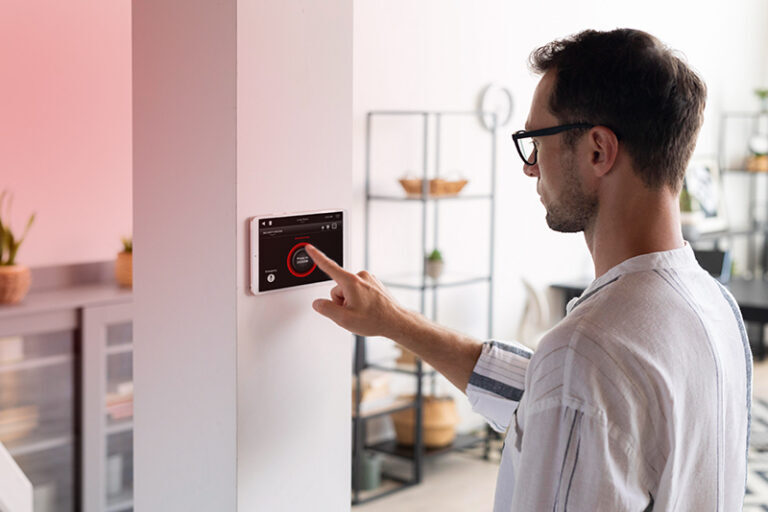
Home automation has moved from novelty to expectation in the premium Hyderabad market. Buyers walking through 3 and 4 BHK apartments now ask about voice control, smart lighting, and integrated security as a baseline, not a bonus. The technology has also matured—what cost ten lakhs five years ago can now be done well for two to three, and the systems are far more reliable.
Here are the six trends actually shaping how Indian homes are being wired in 2026, and what they mean for buyers and builders.
Smarter Sensors
Motion, occupancy, light, temperature, humidity, water leak, and air-quality sensors have all dropped in price and improved in accuracy. The shift is from single-purpose sensors (only motion) to multi-function units that read three or four conditions at once. The practical payoff: lights that respond to actual presence, ACs that adjust to humidity rather than just temperature, and water-leak sensors under sinks and behind washing machines that send instant phone alerts.
For Hyderabad apartments, air-quality sensors have become particularly relevant given seasonal pollution spikes—they trigger air purifiers automatically rather than running them on schedule.
Systematic Management of Energy
Smart meters and load-monitoring systems now track real-time consumption at the appliance level. Homeowners can see which devices draw the most power, set budgets, and automate cut-offs. Combined with rooftop solar and battery storage, these systems can run a 3 BHK on partial off-grid for 4 to 6 hours daily during peak generation.
The energy management layer also handles load shifting—running the dishwasher or geyser during cheaper or solar-positive hours rather than during peak demand.
Autonomy and Robots
Robotic vacuum cleaners and mops are now standard in mid-premium homes. The next wave is task-specific robots—window cleaners, lawn mowers, pool maintenance bots—and the early-stage humanoid assistants beginning to roll out in pilot programs. For most Indian homes the realistic 2026 footprint is one or two cleaning robots with mapping and zoned schedules; the rest is still a few years out.
Better Energy Efficiency
Smart thermostats, BLDC fans, and LED lighting controlled by occupancy sensors typically cut household electricity bills by 20 to 35 percent. The payback period for a full smart-lighting and HVAC retrofit in a 3 BHK is now 3 to 4 years, down from 6 to 8 just a few years back.
For new construction, building these systems in from day one is significantly cheaper than retrofitting—an important consideration when evaluating premium projects. Our take on what to look for in a Hyderabad apartment covers what amenities are now table stakes.
Home Safety
Smart locks (fingerprint, PIN, and app-based), video doorbells with two-way audio, IP cameras with on-device AI, and integrated alarm systems are the four pillars. The newer systems use edge AI to distinguish between a delivery person, a known visitor, and a stranger—reducing false alerts that plagued first-generation systems.
For apartment owners, integration with the building’s intercom and lift-access systems is now possible in newer projects, removing the gap between unit-level and society-level security.
Artificial Intelligence and the Internet of Things
The shift in 2025-26 is from rule-based automation (if motion, then light) to learning systems that observe usage patterns and adjust. Your smart home learns when you wake up, when you typically run the AC, when nobody is home, and tunes itself. Voice assistants—Alexa, Google, and the newer regional-language systems—now handle complex commands and multi-device sequences reliably.
The trade-off is data: most of these systems send usage patterns to cloud servers. Buyers who care about privacy should look for systems that support local-only processing (Home Assistant, HomeKit with local hubs).
Frequently Asked Questions
What are the latest trends in home automation?
Multi-function sensors, energy management with solar integration, AI-driven learning systems, edge-AI security cameras, and voice control with regional language support. The common theme: systems that learn and adapt rather than follow rigid rules.
How much does home automation cost in India?
A basic smart-lighting and security setup for a 3 BHK starts around Rs. 1.5 to 2 lakhs. A full integrated system with smart HVAC, lighting, security, energy management, and entertainment runs Rs. 5 to 12 lakhs depending on brand and complexity.
Does home automation increase property value?
Yes, particularly in the premium segment. Buyers in the Rs. 2 crore+ bracket increasingly expect smart-home infrastructure as standard. A well-designed system can add 3 to 6 percent to resale value and significantly shorten time-on-market in projects where it is not standard. For more on premium-segment expectations, see our piece on The Pearl and what defines luxury living today.