Real estate investors rarely buy on the same logic as end-users. A family shopping for their own home trades off on commute, school proximity, and the view from the living room. An investor cares about rental yield, resale liquidity, and the rate of appreciation over the next five years. Understanding the investor lens matters even if you are only buying for yourself, because the features investors look for usually hold value better over time.
Here is what a serious Indian real estate investor actually evaluates before writing a cheque.
1. Location quality over property quality
Every investor will tell you the same thing: location does the heavy lifting. A mediocre building in a strong micro-market beats a beautiful building in a weak one on any meaningful time horizon. Investors evaluate location against three filters: road and metro connectivity, social infrastructure density (schools, hospitals, retail within 3 km), and whether the area still has scope for new infrastructure to arrive. Built-out central markets appreciate slowly; maturing peripheral markets appreciate in steps.
2. Developer track record
Experienced investors avoid first-time developers in residential, regardless of how attractive the pricing looks. A developer’s handover record, construction quality across completed projects, and post-handover service quality determine whether the asset holds value. The piece on how to choose the best real estate company in Hyderabad covers the verification checklist in detail.
3. Rental yield and tenant profile
Indian residential real estate typically yields 2 to 4 percent gross, which is modest by global standards. Investors look for the upper end of that range: properties near IT corridors, close to colleges, or in integrated townships that command premium rents. They also look at the tenant profile. A 2BHK near an IT park rents in a week to a predictable salaried tenant; a 4BHK in a luxury tower can sit empty for months waiting for the right expatriate family.
4. Resale liquidity
An investment you cannot exit is not an asset. Investors check how often similar units in the project and micro-market change hands, typical time-on-market for resales, and the pricing discipline between asking and closing. A project with thirty completed units across multiple phases is more liquid than one with three boutique towers and sixty total flats.
5. RERA compliance and clean title
Investors do title due diligence even on branded projects. RERA registration, approved building plans from HMDA or GHMC, environmental clearances for large projects, and a clean thirteen-year encumbrance certificate are the baseline. Legal due diligence costs under twenty thousand rupees and protects a crore of investment; skipping it is penny wise, crore foolish.
6. Configuration and saleable size
Investor preference in Indian metros has shifted clearly toward 2BHK and 3BHK units between 1,200 and 1,800 sq ft. These sizes sell fastest in resale, rent most reliably, and need smaller ticket sizes to enter. Studios and 1BHK units have narrower tenant demand. 4BHK and 5BHK luxury units have longer holding periods and thinner resale markets.
7. Floor, view, and configuration premium
Within a project, investors favour mid-to-high floors on preferred sides (clubhouse view, park view, main road avoiding units), two-bedroom-plus-study layouts when available, and corner units with extra light. These commands 5 to 12 percent premiums in resale and typically rent 10 to 15 percent higher than comparable units in the same project.
8. Macro trends and city fundamentals
Good investors zoom out before they zoom in. They check the city’s employment growth, IT absorption rates, population migration patterns, and infrastructure pipeline before picking a micro-market. Hyderabad’s consistent office absorption and corridor expansion along the ORR is the reason the city has delivered reliable residential appreciation for over a decade. The piece on coveted localities in Hyderabad maps this out.
9. Holding cost versus expected appreciation
The full holding cost of a property includes home loan interest, maintenance, property tax, vacancy periods between tenants, and eventual transaction costs on exit. Investors project these against realistic rather than optimistic appreciation. A property that needs 8 to 10 percent annual appreciation to beat a fixed deposit after costs is not a great investment; one that clears that bar comfortably with rental income covering most of the EMI is.
10. Exit horizon clarity
Good investors know when they plan to exit before they enter. A five-year hold requires different property choices than a ten-year hold, and both are different from a buy-and-rent-forever strategy. Under-construction entries with 18-month possession typically fit the five-to-seven-year profile; ready properties in mature markets fit long-term rental holds.
How Hyderabad stacks up on these criteria
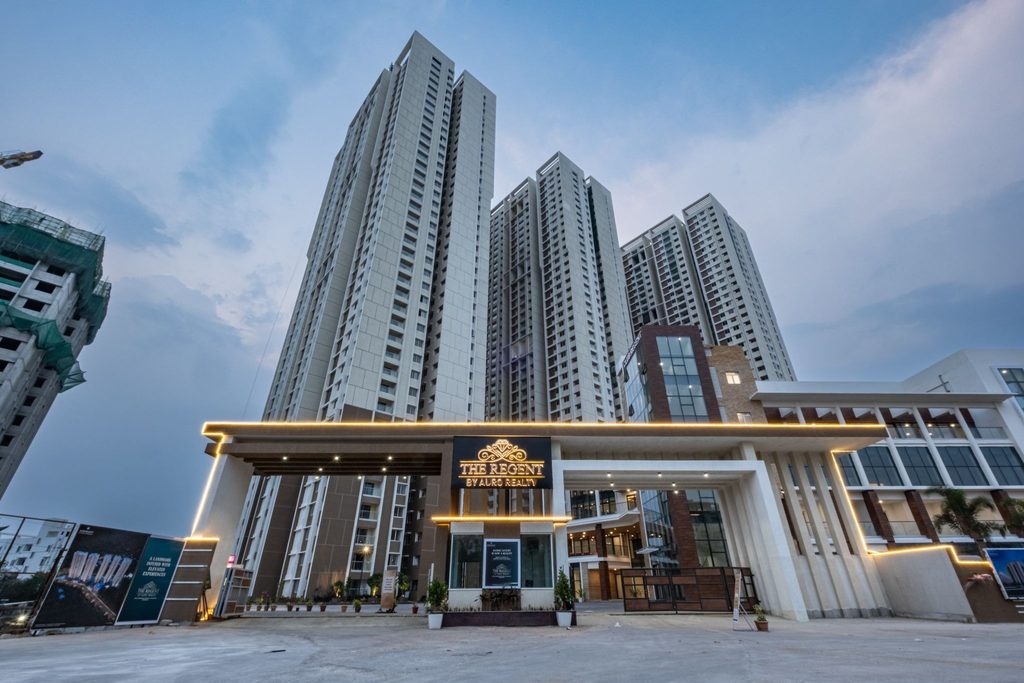
Hyderabad has consistently ranked in the top three Indian cities for investor-friendly real estate because of its office absorption, ORR connectivity, stable pricing relative to Mumbai and Bengaluru, and the maturity of corridors like Gachibowli, Kondapur, and the Financial District. Projects at The Regent in Kondapur and Sansa County are positioned in exactly the micro-markets investors evaluate first.
What do real estate investors look for before buying?
Location quality and developer track record are the top two filters. Beyond that: rental yield, tenant profile, resale liquidity, RERA compliance, configuration size, and a clear exit horizon. Property-level features matter less than most end-users assume.
What rental yield is considered good in Indian real estate?
Indian residential gross yields range from 2 to 4 percent. Investors target the upper end by choosing locations near IT corridors or colleges, and configurations in the 2BHK to 3BHK sweet spot where tenant demand is deepest.
Which configuration gives the best resale value?
2BHK and 3BHK units between 1,200 and 1,800 sq ft have the deepest resale market, rent most reliably, and carry smaller ticket sizes for new buyers. Studios and large 4BHK luxury units have thinner exit markets.
Is Hyderabad a good city for real estate investment?
Hyderabad consistently ranks in the top three Indian cities for investor-friendly real estate, driven by steady office absorption, ORR connectivity, pricing discipline relative to Mumbai and Bengaluru, and maturing peripheral corridors that still have appreciation runway.