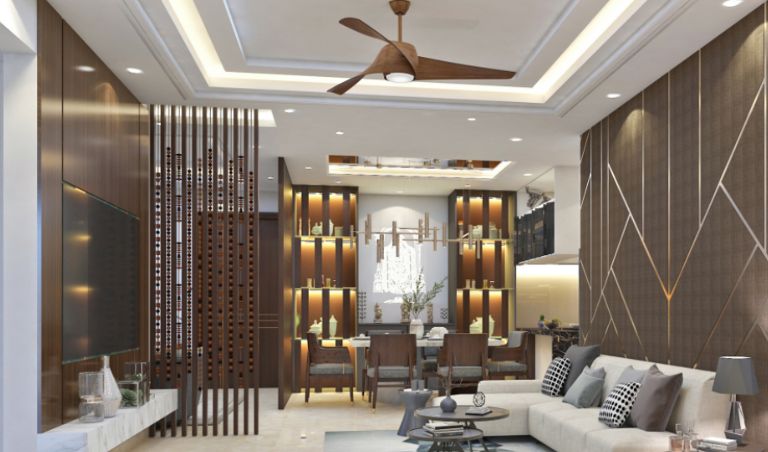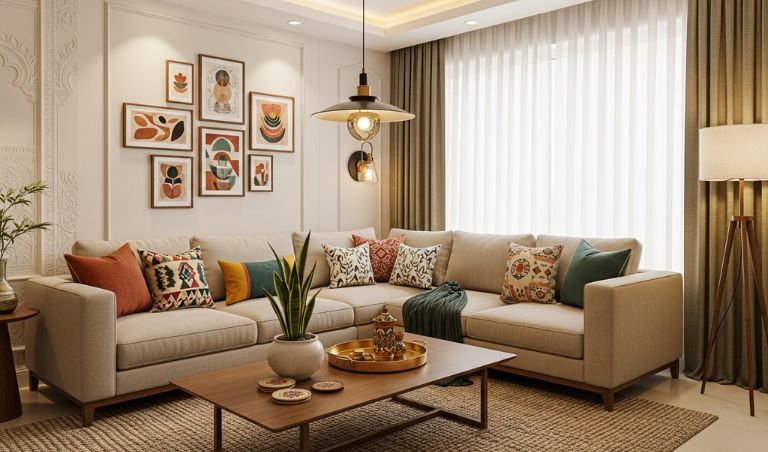
Lighting is the design layer that most luxury homes either nail or quietly ruin. The architecture and the finishes set the stage, but it is the lighting that decides whether the home feels warm, considered, and adaptive across the day, or whether it feels flat, cold, and over-lit. Most luxury home owners notice when lighting is wrong but cannot name what is wrong; the rules below are the ones professional lighting designers apply, written in plain English.
Here is a clear set of do’s and don’ts for lighting and dimming in luxury homes, organised so you can use it during a renovation or a new-home fit-out.
1. Do design lighting in layers, not as a single ceiling source
Every well-lit luxury room runs four lighting layers: ambient (soft general fill), task (focused on activity zones like reading or cooking), accent (highlighting artwork, feature walls, sculptural objects), and decorative (chandeliers, sconces, pendants that contribute as objects). A single bright ceiling light cannot replace all four. The room either feels institutional (too bright) or flat (too dim).
2. Do install dimmers on every layer, on independent circuits
Dimmers are the single largest contributor to perceived luxury in lighting. They allow the same fixture to deliver different moods: bright for cleaning, medium for daily use, dim for entertaining and evening relaxation. The non-negotiable rule is that each layer needs its own dimmable circuit. A single dimmer controlling all four layers together defeats the entire purpose of having layers.
3. Don’t overlight the room with too many downlights
The most common mistake in Indian luxury homes is too many recessed downlights in the ceiling. A 200 sq ft living room does not need fourteen downlights at 50-cm spacing. It needs four to six well-placed downlights paired with table lamps, floor lamps, and a decorative pendant. Over-lighting flattens the room, eliminates shadows, and makes everything feel like a showroom.
4. Do choose colour temperature carefully
Use warm white (2700K to 3000K) for living rooms, bedrooms, and dining rooms. Use neutral white (3500K to 4000K) for kitchens, bathrooms, and home offices. Avoid cool white (5000K and above) anywhere in a residential setting; it makes skin tones look unflattering and the home feel like a hospital. Stick to one colour temperature per room; mixing 2700K and 4000K in the same space produces visual discord.
5. Don’t ignore CRI (Colour Rendering Index)
CRI measures how faithfully a light source renders colours compared to natural daylight. Cheap LEDs run at CRI 70 to 80, which makes wood look muddy, fabrics look washed out, and food look unappetising. Specify CRI 90 or higher for all luxury home installations, particularly for kitchen, dining, and dressing areas. The price difference is small; the visual difference is substantial.
6. Do use accent lighting on art and feature walls
Artwork and feature walls deserve their own light source. A small recessed accent spot or a discreet wall-washer transforms how a piece reads in the room. The accent should be 2 to 3 times brighter than the ambient lighting around it to register as a focal point. Without accent lighting, expensive art looks like generic decor at night.
7. Don’t forget the foyer and circulation spaces
The foyer is where the home introduces itself. A single bright ceiling lamp does it no favours. A well-lit foyer combines a decorative pendant or chandelier (the design statement), wall sconces (warm fill), and an accent on a console or mirror (focal point). The same logic applies to passages, staircases, and lift lobbies in larger homes.
8. Do invest in proper kitchen task lighting
The kitchen is the most lighting-critical room in the home and the most often under-lit. Under-cabinet LED strips on the countertop are non-negotiable. Pendant lights over the island add the decorative layer. Recessed downlights handle ambient. The dimmable combination lets you cook with proper visibility, then drop to mood lighting for serving and dining at the kitchen island.
9. Don’t compromise on bathroom lighting
Bathroom mirror lighting should come from the sides of the mirror at face level, not from above. Top-down lighting alone casts harsh shadows under the eyes and chin and makes shaving, makeup, and grooming difficult. Pair vertical sconces or backlit mirrors with general bathroom downlights for the cleanest setup. CRI 90+ is essential here.
10. Do plan for smart control and scenes
Modern luxury lighting is controlled through smart systems (Lutron, Crestron, KNX) with preset scenes for daily routines: morning, work-from-home, evening dining, entertaining, and night. Scene control eliminates the need to adjust six dimmers individually every time the mood changes. The cost addition is meaningful at the project stage and almost prohibitive as a retrofit, so plan it during the original wiring.
The biggest lighting do and don’t, summarised
The biggest do: design every room with four layers of light, each on an independent dimmer, all using high-CRI warm-white sources. The biggest don’t: over-light the home with cheap cool-white downlights and call it modern. The first approach makes a home feel composed for decades. The second makes it feel dated within five years.
Where to see this thinking applied
Lighting is a topic best understood by walking through a well-lit home. Luxury projects like The Pearl by Auro Realty in Gachibowli and The Regent in Kondapur are designed around layered, dimmable lighting from the wiring stage onward, which makes the difference visible immediately. Related: a broader read on home lighting basics covers the fundamentals.
What are the most important lighting do’s for a luxury home?
Design every room with four layers (ambient, task, accent, decorative) on independent dimmable circuits, choose warm white 2700K to 3000K for living areas, specify CRI 90 or higher for all installations, accent your artwork and feature walls, and plan smart scene control during the wiring stage.
What are the most common lighting don’ts in luxury homes?
Over-lighting with too many recessed downlights, mixing colour temperatures within the same room, using cool white 5000K and above in residential spaces, ignoring CRI by buying cheap LEDs, putting only top-down lighting in bathrooms, and underestimating the foyer.
Why is dimming important in luxury home lighting?
Dimmers allow the same fixture to deliver different moods: bright for cleaning, medium for daily use, dim for entertaining. They are the single largest contributor to perceived luxury in lighting. Each layer of light should have its own independent dimmable circuit, otherwise the layered design defeats itself.
What colour temperature should I use in different rooms?
Warm white 2700K to 3000K for living rooms, bedrooms, and dining rooms. Neutral white 3500K to 4000K for kitchens, bathrooms, and home offices. Avoid cool white 5000K and above anywhere in a home; it makes skin tones look unflattering and the space feel clinical.