Luxury home interiors are not about the most expensive finishes or the most maximalist design. They are about resolving every small decision well. The lighting layers correctly, the materials sit alongside each other in conversation rather than competition, the proportions feel right when you walk in, and the home looks as good ten years later as it does on day one. The Indian luxury market in particular has matured past the marble-and-gold phase into a more considered design language.
Here are the design ideas and structural principles that define genuinely luxurious home interiors today, drawn from how the most thoughtful Hyderabad and Indian luxury homes are actually being designed in 2024 and 2025.
1. Material restraint over material excess
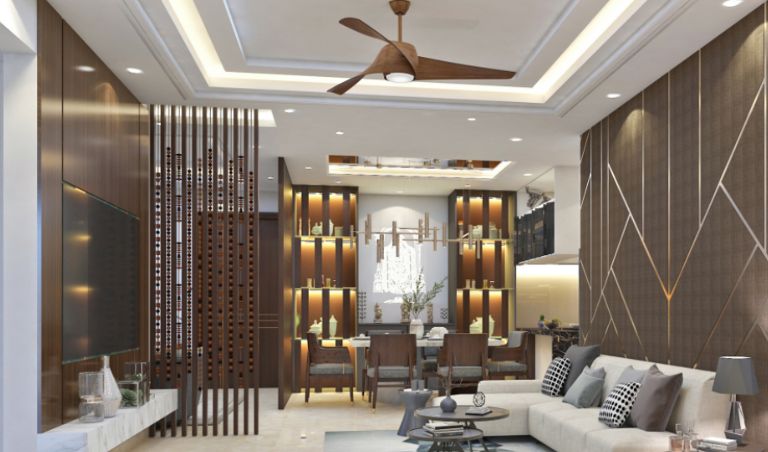
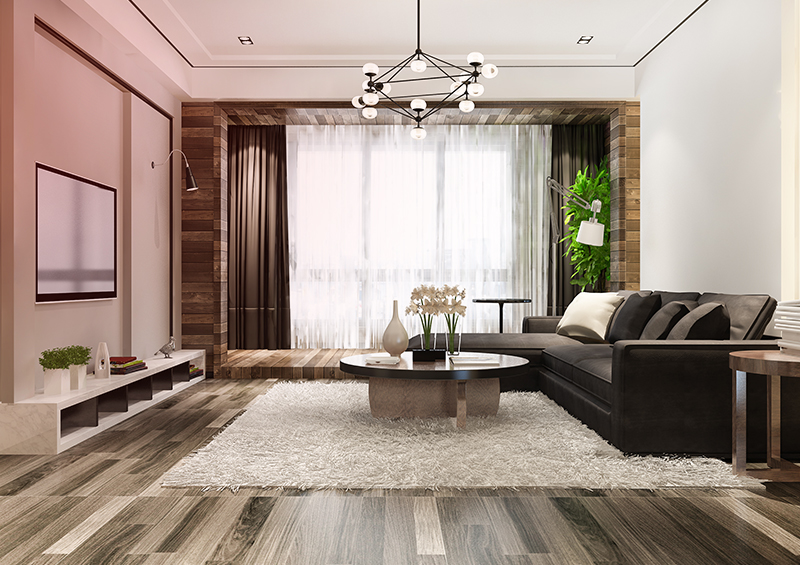
The defining shift in luxury interiors over the past decade is away from a hundred materials in one room toward two or three handled exceptionally well. A Statuario marble floor with walnut veneer panelling and one accent in brushed brass reads as luxurious. The same room with marble plus three woods plus four metals plus two stones reads as overwhelmed. Restraint is the modern luxury signature.
2. Layered lighting as the second architecture
Luxury interiors use lighting as a second layer of architecture, not as a finishing touch. A typical luxury living room runs four lighting layers: ambient ceiling lighting on dimmers, accent lighting on artwork and feature walls, task lighting at reading and seating zones, and decorative lighting from chandeliers, pendants, or sconces. Each layer is independently controlled. The piece on do’s and don’ts of lighting and dimming luxury homes goes deeper into the technical setup.
3. Ceiling height and volume drive the room
The single largest visual luxury cue is ceiling height. Luxury living rooms in well-designed Hyderabad apartments now routinely feature 11 to 14-foot ceilings, sometimes with double-height volumes in the main living area. Tall ceilings change everything: they allow grand chandeliers, full-height bookshelves, larger artwork, and floor-to-ceiling windows. They also make a moderate-sized room feel substantial.
4. The kitchen is the new luxury showpiece
Modern Indian luxury homes are putting the kitchen front and centre. Italian modular kitchens with engineered stone countertops, integrated appliances from Miele or Bosch, soft-close cabinetry, and proper island layouts are now the baseline rather than the upgrade. The kitchen is no longer hidden behind a closed door; it is an open or semi-open space designed to be seen and used.
5. Bathrooms are designed as private retreats
The luxury master bathroom has evolved into a small spa. A free-standing soaking tub, a dual rainfall shower, marble or large-format porcelain finishes, vanities with stone tops and integrated lighting, and dedicated dressing zones are now standard at the top of the market. Underfloor heating in cooler climates and ventilation that actually works are the unsung heroes.
6. Storage that disappears into the architecture
Luxury interiors have lots of storage; they just hide it well. Full-height built-in wardrobes that read as panelling, kitchen pantries behind sliding doors that match the wall finish, dressing rooms with island units, and entryway storage built into the foyer architecture all serve the same purpose: visible surfaces stay uncluttered, and the day-to-day mess of life has a designated place to live out of sight.
7. Art and curation as the final layer
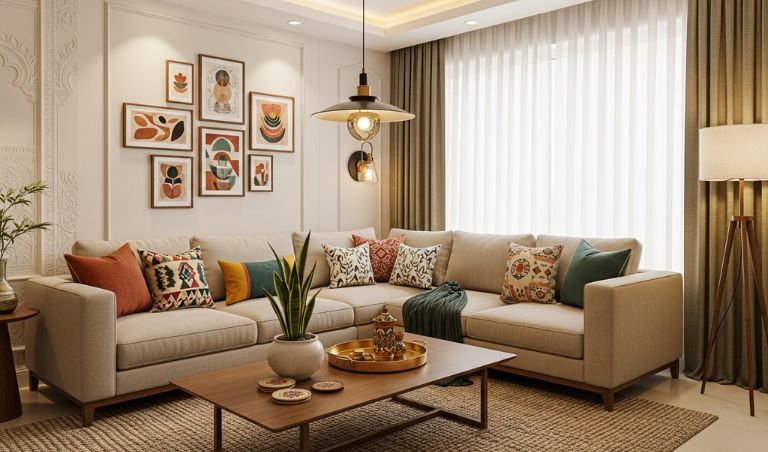
Generic decor accessories are out. Curated, considered art and objects are in. A luxury home increasingly feels like a small private gallery: a few large pieces of meaningful art, sculptural objects placed deliberately, and books and personal collections that reveal the owner’s taste. This layer cannot be outsourced to a designer entirely; the owner has to be involved.
8. Smart home integration that is invisible
Modern luxury homes integrate lighting, climate, audio, security, and shading into a single system controlled from a wall panel, an app, or voice. The luxury is in the invisibility: there are no dozens of remote controls on the coffee table, no cluster of switches on every wall, no audio cables running across the floor. Crestron, Lutron, and KNX-based systems handle this at the high end.
9. Outdoor and indoor flow
Large balconies that are designed as proper outdoor rooms (with weatherproof seating, planting, and lighting) extend the home’s usable space significantly. Sliding floor-to-ceiling glass doors that open the living room to a balcony or terrace double the perceived space and create the indoor-outdoor flow that defines contemporary luxury.
10. Personal spaces: home office, library, dressing room
Luxury homes increasingly carve out personal spaces beyond the standard bedroom-living-kitchen template. A dedicated home office with a closing door, a small library or reading room, a dressing room separate from the bedroom, and a media or screening room are all becoming standard at the higher end. These spaces signal that the home is designed for how the owner actually lives, not just for hosting.
Where to see these principles in practice
The principles above are easier to understand in person than on paper. Walk through a few well-designed luxury projects in Hyderabad to see how they translate. The Pearl by Auro Realty in Gachibowli demonstrates the single-floor sky mansion approach with full-perimeter views and high ceilings. The Regent in Kondapur shows the same design discipline at a 3 and 4BHK family-buyer scale.
What defines luxury home interior design today?
Material restraint over material excess, layered lighting as a second architecture, generous ceiling height, kitchens designed as showpieces, spa-like master bathrooms, hidden storage, curated art, invisible smart home integration, indoor-outdoor flow, and dedicated personal spaces beyond the standard rooms.
How many materials should I use in a luxury room?
Two or three handled exceptionally well, not five or six layered together. The modern luxury signature is restraint. A Statuario marble floor with walnut panelling and one brass accent reads more luxurious than the same room with multiple competing materials.
Why is ceiling height so important in luxury interiors?
Tall ceilings (11 to 14 feet, sometimes double-height) change the entire feel of a room. They allow grand chandeliers, full-height bookshelves, larger artwork, and floor-to-ceiling windows. They also make a moderately sized space feel substantial and hard to imitate at lower heights.
What smart home systems work best for luxury homes?
Crestron, Lutron, and KNX-based systems handle lighting, climate, audio, security, and shading from a single panel, app, or voice control. The luxury is in invisibility: no clusters of remotes, no rows of wall switches, no visible cabling. The integration should disappear into the architecture.