A hobby room is the one corner of the home that exists purely for you. Not for guests, not for family, not for work — just the activity that resets your week. In a city where apartments are getting smaller and the work-from-home lines are blurring, carving out even a small dedicated hobby space has measurable effects on focus, mood and how present you actually feel at home.
The good news: you don’t need a spare bedroom. A well-thought-out 50–80 sq ft corner, set up around the right activity, can do more for you than a 200 sq ft room thrown together without intent. Below is a practical guide on how to plan, design and equip a hobby room that you’ll actually use.
How to Create a Hobby Room at Home
A great hobby room is not about expensive furniture or a Pinterest-perfect aesthetic. It’s about five things — picking the right space, the right surface, the right storage, the right lighting and the right level of personal feel. Get those right and the rest follows.
1. Pick the Right Space (Even a Small One)
Look at your home with fresh eyes. The corner of a guest bedroom, a wide landing, the area under the staircase, an enclosed balcony, a section of the home office — most homes have at least one underused pocket. The space needs to be quiet, have a power point or two, and ideally a window for daylight. Don’t wait for the “perfect” 100 sq ft room — start with the 50 sq ft you actually have.
2. Build Around the Activity
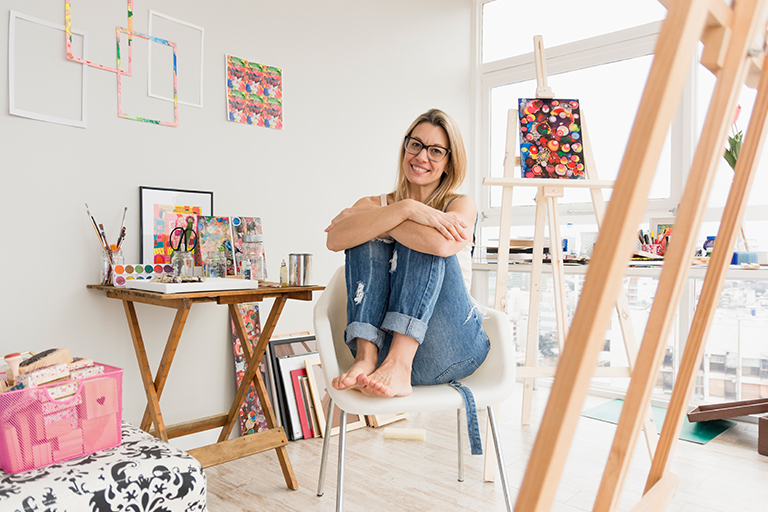
The room should be designed around the hobby, not the other way around. A reading nook needs a comfortable chair, a side table and great light. A painting space needs a wide surface that can take a spill, easy water access and ventilation. A music corner needs sound dampening and a stable acoustic setup. A yoga space needs floor area, a mirror and storage for mats and props. List what your hobby actually needs, then design backward from that.
3. Storage That Doesn’t Become Clutter
The fastest way to kill a hobby room is to fill it with stuff you can’t find. Use closed storage for supplies you use weekly, open shelving for items you want visible (books, plants, completed projects), and labelled boxes or tray organisers for the small things — paint tubes, threads, lenses, drumsticks, whatever your hobby produces. Vertical storage on walls — pegboards, floating shelves, magnetic strips — buys you usable surface area without eating floor space.
4. Lighting That Works for the Activity
Lighting is the single most underrated element. Painters, photographers and crafters need bright, neutral white light with strong colour rendering (look for CRI 90+ LED panels). Readers want a warm, focused task light. Yoga and meditation spaces work best with dimmable, layered lighting. Always combine ambient lighting (overhead) with task lighting (lamp or directed LED) — never rely on one source.
5. Make It Feel Like Yours
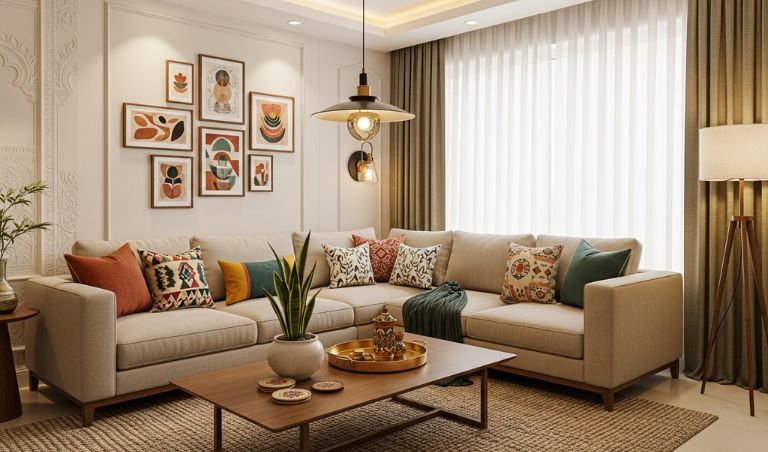
The personal layer is what makes a hobby room feel different from the rest of the house. A few framed prints you actually like. A plant or two. A favourite mug or speaker. The objects you’ve collected from your craft. Spend a small budget here — it pays back every time you walk in. The space should feel like an invitation, not a chore.
Hobbies That Most Benefit From a Dedicated Room
Not every hobby needs a full room — but some genuinely thrive with one: painting and visual art, music practice or recording, woodworking and crafts, photography editing, gaming, yoga and meditation, indoor gardening and home gym. The common thread is that all of them benefit from being able to leave a project mid-state without packing it away — which is exactly what a dedicated space gives you.
Planning a new home? Several Auro Realty floor plans include flexible study or hobby spaces by design — see the project portfolio for current options, or our interior design ideas guide for inspiration.