NRI Property Investment in Hyderabad: Legal Guide, RERA & Tax Implications

NRI Property Investment in Hyderabad: Legal Guide, RERA & Tax Implications

Hyderabad has become one of the most searched Indian cities among NRI property buyers, and the reason isn’t sentiment alone. The city has emerged as a major hub for Global Capability Centers (GCCs), while residential prices have shown strong year-on-year growth and premium homes have accounted for a significant share of overall sales value. For an NRI in Dubai, London, or California with family roots in Telangana or a job connection to Hyderabad’s tech corridors, that combination of job-market pull and price appreciation makes the city hard to ignore.

But the actual transaction sits inside three regulatory frameworks most buyers only half understand: FEMA (which governs whether and how you can buy), RERA (which governs project transparency and builder accountability), and the Income Tax Act (which governs what you owe on the way in, while holding, and on the way out). Get any one of these wrong and you either lose money to unnecessary TDS, get stuck holding a POA-based purchase you can’t legally defend, or find your sale proceeds trapped in an NRO account you can’t move abroad without a chartered accountant’s certificate.

This guide walks through all three, with Hyderabad-specific numbers throughout.

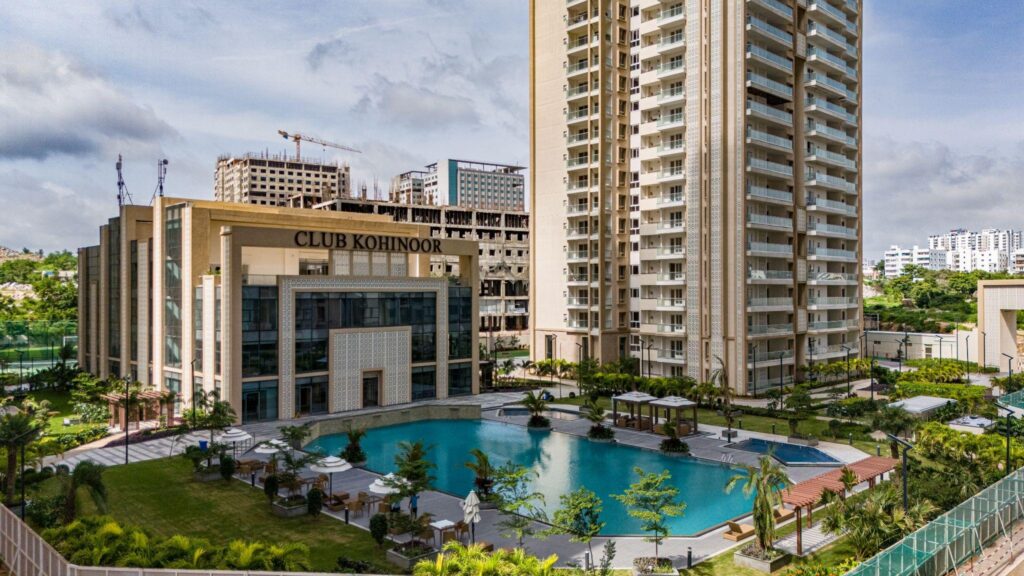
Alt text: Aerial view of HITEC City and Financial District skyline showing Hyderabad’s residential development for NRI buyers

Can NRIs Buy Property in Hyderabad? Legal Rules Under FEMA Explained

Under the Foreign Exchange Management Act (FEMA), 1999, and the RBI’s Master Direction on Acquisition and Transfer of Immovable Property in India, Non-Resident Indians (NRIs) and Overseas Citizens of India (OCI) cardholders can purchase residential and commercial property anywhere in India, including Hyderabad, without seeking prior RBI approval. There is no cap on the number of properties an NRI can own, and no requirement to be physically present in India to complete the purchase.

What FEMA does not permit is purchase of agricultural land, farmhouses, or plantation property by NRIs or OCIs. These categories can only be acquired through inheritance or gift from a resident Indian relative, not through a direct purchase transaction. This restriction applies uniformly across states, including Telangana.

Funds for the purchase must move through recognised banking channels: an NRE (Non-Resident External) account, an NRO (Non-Resident Ordinary) account, an FCNR (Foreign Currency Non-Resident) deposit, or a direct inward remittance from abroad through normal banking channels. Cash transactions and payments through non-banking channels are not permitted under FEMA and can void the legitimacy of the transfer.

Persons of Indian Origin (PIO) who have not converted to OCI status, and NRIs who are citizens of certain neighboring countries, may face additional documentation or approval requirements under FEMA. If you fall into either category, confirm your specific status with a FEMA-qualified chartered accountant before initiating a purchase, since country-specific restrictions are updated periodically and a general guide cannot substitute for a current compliance check.

Verified facts, not guesswork: everything above is standard FEMA position as of 2026. Where the guide flags “confirm with a CA,” it means the rule depends on your specific citizenship, PIO/OCI status, or transaction structure and shouldn’t be assumed from a blog post.

RERA Compliance for NRI Buyers: What to Verify Before Investing in Hyderabad

RERA does not carry special provisions for NRI buyers. Telangana’s RERA authority, TGRERA, applies the same rules to every buyer regardless of residency status: registered projects, escrow-protected buyer funds, disclosed carpet area, and a five-year structural defect liability period on the builder. That equal treatment is actually the point of leverage for NRI buyers who cannot visit a site repeatedly before booking.

Before transferring any booking amount, verify the project’s RERA registration directly on the TGRERA portal (rera.telangana.gov.in). A registered project will carry a specific registration number, which any credible developer will publish on its own website and marketing material. Auro Realty projects, for example, carry the following live registrations: The Pearl in HITEC City is registered under TS RERA No. P02400005068, and Sansa County in Patancheru, developed by Aurobindo Tattva Township Developers LLP, carries TSRERA No. P01100007329 along with HMDA Layout Permit No. 35/LO/Plg/HMDA/2023. Cross-checking these numbers against the TGRERA database takes under five minutes and confirms the project is legally cleared to collect buyer money, that at least 70% of buyer payments are held in a project-specific escrow account, and that the developer has disclosed a committed possession timeline.

Why POA-based transactions need extra scrutiny

Most NRI buyers cannot fly to Hyderabad to sign every document in person, so purchases are often completed through a Power of Attorney (POA) holder in India, typically a family member or a lawyer. A GPA (General Power of Attorney) grants broad, ongoing authority and carries higher misuse risk. An SPA (Special Power of Attorney), scoped narrowly to a specific transaction with a defined validity period, is the safer instrument for a one-time purchase or sale.

For the POA to be valid in an Indian registration office, it must be executed and attested at an Indian Embassy or Consulate abroad, then adjudicated (stamped) and registered with the local Sub-Registrar in Telangana within the statutory timeframe. A POA signed abroad without this attestation chain is frequently rejected at the registration stage, which is one of the most common reasons NRI transactions stall. Auro Realty has covered this process in detail in a dedicated guide on power of attorney documentation for NRIs in Telangana, worth reading in full before you appoint anyone to act on your behalf.

Alt text: NRI buyer and advisor reviewing RERA registration certificate and property documents together

Home Loans for NRIs: Banks, Eligibility & Interest Rates in 2026

NRIs are eligible for home loans from most major Indian banks, subject to income documentation and a repayment structure routed through an NRE or NRO account. As of July 2026, with the RBI repo rate at 5.25%, indicative starting rates look like this:

LenderStarting Interest Rate (p.a.)Notes
Bank of India, Bank of Maharashtra (PSU)From 7.10%Often the most competitive starting rates
SBIFrom 7.25%Widest NRI branch network for documentation
HDFC BankFrom 7.90%Strong NRI-specific loan desk
ICICI Bank / Axis BankFrom 8.35%Faster digital processing for NRI applicants

Actual rates depend on credit profile, loan amount, and property type, and lenders periodically add a small NRI-specific premium over resident rates. Confirm the exact quote with each bank before comparing, since these figures move with repo rate changes.

Typical eligibility and documentation: – Loan-to-value (LTV) ratio generally runs 75-80% for larger loan amounts, occasionally up to 90% for smaller ticket sizes, in line with standard RBI lending norms applied to all borrowers. – Tenure typically ranges from 15 to 20 years, sometimes longer, usually capped so the loan closes before a set retirement age. – Documents required include a valid passport, current visa or work permit, OCI/PIO card if applicable, overseas salary slips or income proof, NRE/NRO bank statements, and a Power of Attorney authorizing a representative in India to handle local formalities if the borrower cannot be present for disbursement and registration. – Most banks require the loan to be repaid through inward remittances into the NRE/NRO account linked to the loan, not through third-party or local cash payments.

For a broader walkthrough of the home loan process specific to Hyderabad apartment purchases, see Auro Realty’s guide on home loans for apartments in Hyderabad, which covers documentation timelines resident and NRI buyers both need to plan around.

Alt text: NRI professional on a video call reviewing home loan documents with a bank relationship manager

Tax Implications for NRIs Owning Property in India: TDS, Capital Gains & More

Tax treatment is where NRI and resident Indian buyers diverge most sharply, and where the most expensive mistakes happen.

On purchase: when an NRI buys property from a resident seller, standard TDS rules apply to the seller (1% under Section 194-IA if the sale value exceeds ₹50 lakh). But when the seller is themselves an NRI, the buyer (even a resident Indian buyer) must deduct TDS under Section 195, at a much higher rate than the familiar 1%, and deposit it with the Income Tax Department. Missing this obligation makes the buyer personally liable for the shortfall.

On sale, for an NRI seller: the applicable capital gains rate depends on the acquisition date, following the Budget 2024 amendment:

ScenarioLong-Term Capital Gains RateApprox. TDS (with surcharge + cess)
Property acquired on/after 23 July 202412.5% without indexationRoughly 13% to 15%, rising with sale value slabs
Property acquired before 23 July 2024Option of 20% with indexation, or 12.5% without, whichever is lowerRoughly 20.8% to 23.9% if 20% route applies
Short-term capital gains (held under 2 years)Taxed at applicable slab rateCan run significantly higher, reported near 30-42% in higher income brackets including surcharge

TDS for NRI sellers is calculated on the full sale value or the capital gain, not just a flat percentage of the transaction like resident sellers face, which is why NRI sellers often see a much larger amount withheld at registration than they expect. These are indicative rates as of 2026; confirm the exact applicable rate, surcharge slab, and any subsequent Finance Act changes with a practicing CA before your transaction, since capital gains provisions are among the most frequently amended parts of the Income Tax Act.

If the actual tax liability is lower than the standard TDS rate would deduct, sellers can apply to the jurisdictional Assessing Officer under Section 197 for a lower or nil TDS certificate (Form 13), submitted before the sale deed is executed. This is the single most useful, most underused step in NRI property sales, since without it, refunds of excess TDS can take months to process after filing a return.

Rental income earned by an NRI on Hyderabad property is taxable in India regardless of where the owner lives, with TDS deducted by the tenant at the applicable rate before the balance is remitted. Most NRIs can claim relief from double taxation under India’s Double Taxation Avoidance Agreement (DTAA) with their country of residence, which should be checked against the specific country’s treaty terms.

Alt text: Flat lay of property tax documents, passport, and calculator for NRI capital gains tax planning

How NRIs Can Repatriate Sale Proceeds from Indian Property: Step-by-Step Guide

Moving sale proceeds out of India is governed by RBI rules separate from the resident-only Liberalised Remittance Scheme (LRS). NRIs use a distinct repatriation facility tied to their NRO or NRE account.

Account TypeRepatriation LimitTypical Use
NRE accountFully and freely repatriable, no capFunds originally remitted from abroad or foreign income
FCNR depositFully and freely repatriable, no capForeign currency term deposits
NRO accountUp to USD 1 million per financial year, subject to tax complianceSale proceeds of property, rental income, and other India-sourced funds

Since property sale proceeds are almost always credited to an NRO account, the USD 1 million per financial year limit is the number that matters most for NRI property sellers. Amounts beyond that threshold require specific RBI approval and are handled as exceptions, not the standard route.

Step-by-step repatriation process:

1.          Deposit sale proceeds into your NRO account after TDS has been deducted at registration.

2.          Obtain a certificate from a Chartered Accountant confirming the source of funds and tax compliance status (this feeds into Form 15CB).

3.          File Form 15CA on the Income Tax Department’s e-filing portal, selecting the correct part (A, B, C, or D) based on the transaction’s taxability and amount.

4.          For most property-sale remittances above ₹5 lakh, pair Form 15CA with Form 15CB, the CA-certified form confirming tax has been correctly accounted for.

5.          Submit both forms along with the sale deed, TDS challan, and bank documentation to your bank’s authorized dealer branch.

6.          The bank processes the outward remittance from the NRO account, capped at USD 1 million for the financial year across all NRO repatriations combined, not per transaction.

7.          Retain all documentation (FIRC where applicable, 15CA/15CB acknowledgments, TDS certificates) for at least the standard tax record retention period, since these are the documents an Assessing Officer will ask for if the transaction is later reviewed.

NRO-to-NRE transfers follow a similar documentation trail and count toward the same USD 1 million annual limit, so sellers planning a large repatriation should map out timing across the financial year rather than assuming the limit resets per transaction.

Putting It Together for Hyderabad

None of these frameworks exist in isolation for a real transaction. An NRI buying into a RERA-registered project like The Pearl or Sansa County still needs FEMA-compliant funding, still needs to plan for TDS if they later sell, and still needs a repatriation strategy that accounts for the USD 1 million NRO cap. With Metro Phase 2 (76.4 km, ₹24,200 crore) underway and forecasts pointing to 10-20% appreciation along new corridors over the next three to five years, the market case for Hyderabad is easy to make. The legal and tax groundwork is what determines whether that return actually reaches your account abroad, cleanly and on time.


Frequently Asked Questions

1. Can NRIs buy property in Hyderabad without visiting India in person? Yes. NRIs can complete a property purchase in Hyderabad entirely from abroad using a registered Special Power of Attorney (SPA) to authorize someone in India to sign documents on their behalf. The SPA must be attested at an Indian Embassy or Consulate and registered with the local Sub-Registrar before it’s valid for the transaction.

2. What property types are NRIs restricted from buying in India? NRIs cannot purchase agricultural land, farmhouses, or plantation property under FEMA. They can freely purchase residential and commercial property. Agricultural land can only be acquired by an NRI through inheritance or gift from a resident relative, not through direct purchase.

3. Is RERA registration mandatory for the project I’m buying into as an NRI? Yes, for any project above the RERA size threshold. Verify the registration number on the TGRERA portal directly rather than relying on marketing claims. Auro Realty’s The Pearl (TS RERA No. P02400005068) and Sansa County (TSRERA No. P01100007329) are both live examples of verifiable registrations.

4. How much TDS is deducted when an NRI sells property in India? The buyer must deduct TDS under Section 195. For long-term capital gains on property acquired on or after July 23, 2024, this runs roughly 13-15% including surcharge and cess, based on 12.5% without indexation. For property acquired earlier, sellers can choose between 20% with indexation or 12.5% without, whichever gives a lower liability. Confirm current slabs with a CA before your specific transaction.

5. Can an NRI apply for a lower TDS deduction on property sale? Yes. If actual tax liability is lower than the standard TDS rate would withhold, the seller can apply to the jurisdictional Assessing Officer under Section 197 using Form 13, before the sale deed is executed, to get a lower or nil deduction certificate.

6. Which banks offer the best NRI home loan rates, and how much can I borrow? As of July 2026, PSU banks like Bank of India and Bank of Maharashtra start from around 7.10%, SBI from 7.25%, HDFC Bank from 7.90%, and ICICI/Axis Bank from around 8.35%. Most lenders finance 75-80% of the property value for larger loans, occasionally up to 90% for smaller ones. Confirm both the rate and the LTV directly with each lender.

7. What is the difference between NRO and NRE accounts for repatriating property sale proceeds? NRE and FCNR account balances can be repatriated abroad fully and freely with no cap. NRO accounts, where property sale proceeds are typically credited after TDS, are capped at USD 1 million per financial year for repatriation, and require Form 15CA/15CB documentation.

8. Do NRIs pay tax on rental income from property in Hyderabad? Yes. Rental income earned by an NRI on Indian property is taxable in India regardless of where the owner resides. The tenant is generally required to deduct TDS before remitting rent, and the NRI can claim DTAA relief against double taxation in their country of residence, subject to that country’s treaty terms.

9. What is Form 15CA and 15CB, and why do I need both to repatriate money? Form 15CA is a self-declaration filed on the Income Tax e-filing portal confirming the tax status of an outward remittance. Form 15CB is a Chartered Accountant’s certificate confirming tax compliance for larger remittances. Most property-sale repatriations above ₹5 lakh require both before a bank will process the outward transfer.

10. Can OCI cardholders buy property in Hyderabad the same way NRIs can? OCI cardholders generally have property acquisition rights aligned with NRIs for residential and commercial property, with the same restriction on agricultural land, farmhouses, and plantations. Country-specific or status-specific exceptions can apply, so confirm your exact standing with a FEMA-qualified advisor before proceeding.

11. Why does Hyderabad specifically appeal to NRI property investors right now? Hyderabad has emerged as a major hub for Global Capability Centers, while residential prices have shown strong year-on-year growth and ongoing infrastructure investment is expected to support demand along emerging corridors. That combination of job-market demand and infrastructure development is why NRI interest in the city has grown steadily.

Hyderabad has become one of the most searched Indian cities among NRI property buyers, and the reason isn’t sentiment alone. The city has emerged as a major hub for Global Capability Centers (GCCs), while residential prices have shown strong year-on-year growth and premium homes have accounted for a significant share of overall sales value. For an NRI in Dubai, London, or California with family roots in Telangana or a job connection to Hyderabad’s tech corridors, that combination of job-market pull and price appreciation makes the city hard to ignore.

But the actual transaction sits inside three regulatory frameworks most buyers only half understand: FEMA (which governs whether and how you can buy), RERA (which governs project transparency and builder accountability), and the Income Tax Act (which governs what you owe on the way in, while holding, and on the way out). Get any one of these wrong and you either lose money to unnecessary TDS, get stuck holding a POA-based purchase you can’t legally defend, or find your sale proceeds trapped in an NRO account you can’t move abroad without a chartered accountant’s certificate.

This guide walks through all three, with Hyderabad-specific numbers throughout.

image

Can NRIs Buy Property in Hyderabad? Legal Rules Under FEMA Explained

Under the Foreign Exchange Management Act (FEMA), 1999, and the RBI’s Master Direction on Acquisition and Transfer of Immovable Property in India, Non-Resident Indians (NRIs) and Overseas Citizens of India (OCI) cardholders can purchase residential and commercial property anywhere in India, including Hyderabad, without seeking prior RBI approval. There is no cap on the number of properties an NRI can own, and no requirement to be physically present in India to complete the purchase.

What FEMA does not permit is purchase of agricultural land, farmhouses, or plantation property by NRIs or OCIs. These categories can only be acquired through inheritance or gift from a resident Indian relative, not through a direct purchase transaction. This restriction applies uniformly across states, including Telangana.

Funds for the purchase must move through recognised banking channels: an NRE (Non-Resident External) account, an NRO (Non-Resident Ordinary) account, an FCNR (Foreign Currency Non-Resident) deposit, or a direct inward remittance from abroad through normal banking channels. Cash transactions and payments through non-banking channels are not permitted under FEMA and can void the legitimacy of the transfer.

Persons of Indian Origin (PIO) who have not converted to OCI status, and NRIs who are citizens of certain neighboring countries, may face additional documentation or approval requirements under FEMA. If you fall into either category, confirm your specific status with a FEMA-qualified chartered accountant before initiating a purchase, since country-specific restrictions are updated periodically and a general guide cannot substitute for a current compliance check.

Verified facts, not guesswork: everything above is standard FEMA position as of 2026. Where the guide flags “confirm with a CA,” it means the rule depends on your specific citizenship, PIO/OCI status, or transaction structure and shouldn’t be assumed from a blog post.

RERA Compliance for NRI Buyers: What to Verify Before Investing in Hyderabad

RERA does not carry special provisions for NRI buyers. Telangana’s RERA authority, TGRERA, applies the same rules to every buyer regardless of residency status: registered projects, escrow-protected buyer funds, disclosed carpet area, and a five-year structural defect liability period on the builder. That equal treatment is actually the point of leverage for NRI buyers who cannot visit a site repeatedly before booking.

Before transferring any booking amount, verify the project’s RERA registration directly on the TGRERA portal (rera.telangana.gov.in). A registered project will carry a specific registration number, which any credible developer will publish on its own website and marketing material. Auro Realty projects, for example, carry the following live registrations: The Pearl in HITEC City is registered under TS RERA No. P02400005068, and Sansa County in Patancheru, developed by Aurobindo Tattva Township Developers LLP, carries TSRERA No. P01100007329 along with HMDA Layout Permit No. 35/LO/Plg/HMDA/2023. Cross-checking these numbers against the TGRERA database takes under five minutes and confirms the project is legally cleared to collect buyer money, that at least 70% of buyer payments are held in a project-specific escrow account, and that the developer has disclosed a committed possession timeline.

Why POA-based transactions need extra scrutiny

Most NRI buyers cannot fly to Hyderabad to sign every document in person, so purchases are often completed through a Power of Attorney (POA) holder in India, typically a family member or a lawyer. A GPA (General Power of Attorney) grants broad, ongoing authority and carries higher misuse risk. An SPA (Special Power of Attorney), scoped narrowly to a specific transaction with a defined validity period, is the safer instrument for a one-time purchase or sale.

For the POA to be valid in an Indian registration office, it must be executed and attested at an Indian Embassy or Consulate abroad, then adjudicated (stamped) and registered with the local Sub-Registrar in Telangana within the statutory timeframe. A POA signed abroad without this attestation chain is frequently rejected at the registration stage, which is one of the most common reasons NRI transactions stall. Auro Realty has covered this process in detail in a dedicated guide on power of attorney documentation for NRIs in Telangana, worth reading in full before you appoint anyone to act on your behalf.

image

Home Loans for NRIs: Banks, Eligibility & Interest Rates in 2026

NRIs are eligible for home loans from most major Indian banks, subject to income documentation and a repayment structure routed through an NRE or NRO account. As of July 2026, with the RBI repo rate at 5.25%, indicative starting rates look like this:

LenderStarting Interest Rate (p.a.)Notes
Bank of India, Bank of Maharashtra (PSU)From 7.10%Often the most competitive starting rates
SBIFrom 7.25%Widest NRI branch network for documentation
HDFC BankFrom 7.90%Strong NRI-specific loan desk
ICICI Bank / Axis BankFrom 8.35%Faster digital processing for NRI applicants

Actual rates depend on credit profile, loan amount, and property type, and lenders periodically add a small NRI-specific premium over resident rates. Confirm the exact quote with each bank before comparing, since these figures move with repo rate changes.

Typical eligibility and documentation: – Loan-to-value (LTV) ratio generally runs 75-80% for larger loan amounts, occasionally up to 90% for smaller ticket sizes, in line with standard RBI lending norms applied to all borrowers. – Tenure typically ranges from 15 to 20 years, sometimes longer, usually capped so the loan closes before a set retirement age. – Documents required include a valid passport, current visa or work permit, OCI/PIO card if applicable, overseas salary slips or income proof, NRE/NRO bank statements, and a Power of Attorney authorizing a representative in India to handle local formalities if the borrower cannot be present for disbursement and registration. – Most banks require the loan to be repaid through inward remittances into the NRE/NRO account linked to the loan, not through third-party or local cash payments.

For a broader walkthrough of the home loan process specific to Hyderabad apartment purchases, see Auro Realty’s guide on home loans for apartments in Hyderabad, which covers documentation timelines resident and NRI buyers both need to plan around.

image

Tax Implications for NRIs Owning Property in India: TDS, Capital Gains & More

Tax treatment is where NRI and resident Indian buyers diverge most sharply, and where the most expensive mistakes happen.

On purchase: when an NRI buys property from a resident seller, standard TDS rules apply to the seller (1% under Section 194-IA if the sale value exceeds ₹50 lakh). But when the seller is themselves an NRI, the buyer (even a resident Indian buyer) must deduct TDS under Section 195, at a much higher rate than the familiar 1%, and deposit it with the Income Tax Department. Missing this obligation makes the buyer personally liable for the shortfall.

On sale, for an NRI seller: the applicable capital gains rate depends on the acquisition date, following the Budget 2024 amendment:

ScenarioLong-Term Capital Gains RateApprox. TDS (with surcharge + cess)
Property acquired on/after 23 July 202412.5% without indexationRoughly 13% to 15%, rising with sale value slabs
Property acquired before 23 July 2024Option of 20% with indexation, or 12.5% without, whichever is lowerRoughly 20.8% to 23.9% if 20% route applies
Short-term capital gains (held under 2 years)Taxed at applicable slab rateCan run significantly higher, reported near 30-42% in higher income brackets including surcharge

TDS for NRI sellers is calculated on the full sale value or the capital gain, not just a flat percentage of the transaction like resident sellers face, which is why NRI sellers often see a much larger amount withheld at registration than they expect. These are indicative rates as of 2026; confirm the exact applicable rate, surcharge slab, and any subsequent Finance Act changes with a practicing CA before your transaction, since capital gains provisions are among the most frequently amended parts of the Income Tax Act.

If the actual tax liability is lower than the standard TDS rate would deduct, sellers can apply to the jurisdictional Assessing Officer under Section 197 for a lower or nil TDS certificate (Form 13), submitted before the sale deed is executed. This is the single most useful, most underused step in NRI property sales, since without it, refunds of excess TDS can take months to process after filing a return.

Rental income earned by an NRI on Hyderabad property is taxable in India regardless of where the owner lives, with TDS deducted by the tenant at the applicable rate before the balance is remitted. Most NRIs can claim relief from double taxation under India’s Double Taxation Avoidance Agreement (DTAA) with their country of residence, which should be checked against the specific country’s treaty terms.

image

How NRIs Can Repatriate Sale Proceeds from Indian Property: Step-by-Step Guide

Moving sale proceeds out of India is governed by RBI rules separate from the resident-only Liberalised Remittance Scheme (LRS). NRIs use a distinct repatriation facility tied to their NRO or NRE account.

Account TypeRepatriation LimitTypical Use
NRE accountFully and freely repatriable, no capFunds originally remitted from abroad or foreign income
FCNR depositFully and freely repatriable, no capForeign currency term deposits
NRO accountUp to USD 1 million per financial year, subject to tax complianceSale proceeds of property, rental income, and other India-sourced funds

Since property sale proceeds are almost always credited to an NRO account, the USD 1 million per financial year limit is the number that matters most for NRI property sellers. Amounts beyond that threshold require specific RBI approval and are handled as exceptions, not the standard route.

Step-by-step repatriation process:

1.          Deposit sale proceeds into your NRO account after TDS has been deducted at registration.

2.          Obtain a certificate from a Chartered Accountant confirming the source of funds and tax compliance status (this feeds into Form 15CB).

3.          File Form 15CA on the Income Tax Department’s e-filing portal, selecting the correct part (A, B, C, or D) based on the transaction’s taxability and amount.

4.          For most property-sale remittances above ₹5 lakh, pair Form 15CA with Form 15CB, the CA-certified form confirming tax has been correctly accounted for.

5.          Submit both forms along with the sale deed, TDS challan, and bank documentation to your bank’s authorized dealer branch.

6.          The bank processes the outward remittance from the NRO account, capped at USD 1 million for the financial year across all NRO repatriations combined, not per transaction.

7.          Retain all documentation (FIRC where applicable, 15CA/15CB acknowledgments, TDS certificates) for at least the standard tax record retention period, since these are the documents an Assessing Officer will ask for if the transaction is later reviewed.

NRO-to-NRE transfers follow a similar documentation trail and count toward the same USD 1 million annual limit, so sellers planning a large repatriation should map out timing across the financial year rather than assuming the limit resets per transaction.

Putting It Together for Hyderabad

None of these frameworks exist in isolation for a real transaction. An NRI buying into a RERA-registered project like The Pearl or Sansa County still needs FEMA-compliant funding, still needs to plan for TDS if they later sell, and still needs a repatriation strategy that accounts for the USD 1 million NRO cap. With Metro Phase 2 (76.4 km, ₹24,200 crore) underway and forecasts pointing to 10-20% appreciation along new corridors over the next three to five years, the market case for Hyderabad is easy to make. The legal and tax groundwork is what determines whether that return actually reaches your account abroad, cleanly and on time.


Frequently Asked Questions

1. Can NRIs buy property in Hyderabad without visiting India in person? Yes. NRIs can complete a property purchase in Hyderabad entirely from abroad using a registered Special Power of Attorney (SPA) to authorize someone in India to sign documents on their behalf. The SPA must be attested at an Indian Embassy or Consulate and registered with the local Sub-Registrar before it’s valid for the transaction.

2. What property types are NRIs restricted from buying in India? NRIs cannot purchase agricultural land, farmhouses, or plantation property under FEMA. They can freely purchase residential and commercial property. Agricultural land can only be acquired by an NRI through inheritance or gift from a resident relative, not through direct purchase.

3. Is RERA registration mandatory for the project I’m buying into as an NRI? Yes, for any project above the RERA size threshold. Verify the registration number on the TGRERA portal directly rather than relying on marketing claims. Auro Realty’s The Pearl (TS RERA No. P02400005068) and Sansa County (TSRERA No. P01100007329) are both live examples of verifiable registrations.

4. How much TDS is deducted when an NRI sells property in India? The buyer must deduct TDS under Section 195. For long-term capital gains on property acquired on or after July 23, 2024, this runs roughly 13-15% including surcharge and cess, based on 12.5% without indexation. For property acquired earlier, sellers can choose between 20% with indexation or 12.5% without, whichever gives a lower liability. Confirm current slabs with a CA before your specific transaction.

5. Can an NRI apply for a lower TDS deduction on property sale? Yes. If actual tax liability is lower than the standard TDS rate would withhold, the seller can apply to the jurisdictional Assessing Officer under Section 197 using Form 13, before the sale deed is executed, to get a lower or nil deduction certificate.

6. Which banks offer the best NRI home loan rates, and how much can I borrow? As of July 2026, PSU banks like Bank of India and Bank of Maharashtra start from around 7.10%, SBI from 7.25%, HDFC Bank from 7.90%, and ICICI/Axis Bank from around 8.35%. Most lenders finance 75-80% of the property value for larger loans, occasionally up to 90% for smaller ones. Confirm both the rate and the LTV directly with each lender.

7. What is the difference between NRO and NRE accounts for repatriating property sale proceeds? NRE and FCNR account balances can be repatriated abroad fully and freely with no cap. NRO accounts, where property sale proceeds are typically credited after TDS, are capped at USD 1 million per financial year for repatriation, and require Form 15CA/15CB documentation.

8. Do NRIs pay tax on rental income from property in Hyderabad? Yes. Rental income earned by an NRI on Indian property is taxable in India regardless of where the owner resides. The tenant is generally required to deduct TDS before remitting rent, and the NRI can claim DTAA relief against double taxation in their country of residence, subject to that country’s treaty terms.

9. What is Form 15CA and 15CB, and why do I need both to repatriate money? Form 15CA is a self-declaration filed on the Income Tax e-filing portal confirming the tax status of an outward remittance. Form 15CB is a Chartered Accountant’s certificate confirming tax compliance for larger remittances. Most property-sale repatriations above ₹5 lakh require both before a bank will process the outward transfer.

10. Can OCI cardholders buy property in Hyderabad the same way NRIs can? OCI cardholders generally have property acquisition rights aligned with NRIs for residential and commercial property, with the same restriction on agricultural land, farmhouses, and plantations. Country-specific or status-specific exceptions can apply, so confirm your exact standing with a FEMA-qualified advisor before proceeding.

11. Why does Hyderabad specifically appeal to NRI property investors right now? Hyderabad has emerged as a major hub for Global Capability Centers, while residential prices have shown strong year-on-year growth and ongoing infrastructure investment is expected to support demand along emerging corridors. That combination of job-market demand and infrastructure development is why NRI interest in the city has grown steadily.

12. What happens if my Power of Attorney holder in India misuses their authority? This is the biggest practical risk in NRI transactions. Using a narrowly scoped Special Power of Attorney (rather than a broad General Power of Attorney), setting a clear validity period, and registering the POA properly all reduce this risk substantially. Revoking a POA requires formal documentation filed with the same Sub-Registrar where it was registered.

Disclaimer


Thank you for visiting our website.

This website is in the process of being updated in accordance with the terms and conditions envisaged under the Real Estate (Regulation and Development) Act, 2016. By visiting this website, the reader confirms that the content displayed on this website is solely for informational purpose. All specifications, plans, images, designs, locations, facilities, dimensions and other details herein are only indicative for representative purpose/s only and are subject to the approval of the authorities from time to time.

Aurobindo Realty reserves the right to alter or delete any of such content without any notice. The website is intended for giving a holistic view about ‘Aurobindo Realty’.

We thank you for your patience and understanding.

I Agree