Lighting changes the feel of a home faster than any other design choice. The same room can feel cramped under a single ceiling bulb and luxurious under three layers of well-placed light. Most Indian homes still rely on flat overhead lighting — a quick layering upgrade can transform how the space looks, feels, and functions, often for under ₹15,000.
Here are 5 practical ways to improve lighting at home, with the specific products, lumen levels, and placement rules that actually work.
1. Choose the right LED specification, not just the wattage
LEDs are the only sensible default in 2026 — 80 percent less power than incandescent and a 25,000-hour lifespan. But picking the right LED matters more than people think. Two specifications decide the feel:
- Colour temperature (Kelvin): 2700K–3000K for warm, restful light in bedrooms and living rooms. 4000K (neutral) for kitchens and study areas. 5000K+ (cool white) only for bathrooms and utility spaces.
- CRI (Colour Rendering Index): insist on CRI 90+. Anything below 80 makes skin tones, food, and fabrics look washed out.
For brand reliability, Philips, Wipro, Havells, and Syska are dependable choices. Avoid generic LEDs — the colour shifts within months.
2. Layer the lighting — ambient, task, and accent
One ceiling fixture is the single biggest lighting mistake in Indian homes. Good lighting always uses three layers:
- Ambient: general overhead light. Recessed downlights, surface panels, or a chandelier in the living room.
- Task: directed light where you do something — under-cabinet strips in the kitchen, a focused desk lamp at a study, bedside reading lamps.
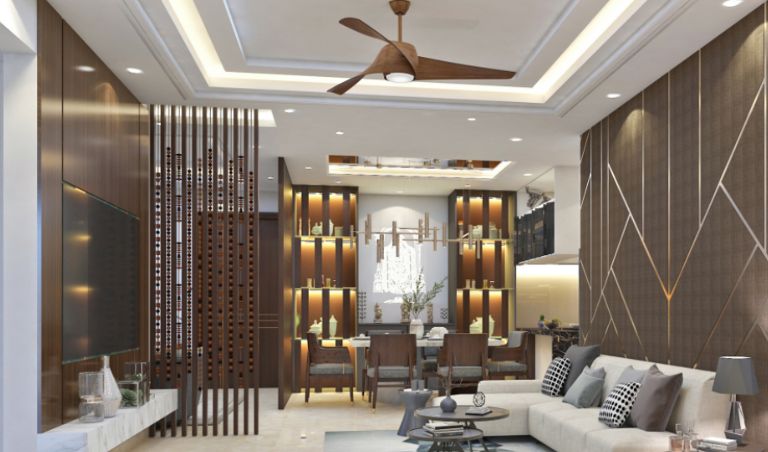
- Accent: decorative or directional light that highlights texture — a wall washer on a feature wall, a picture light over art, an LED strip behind a TV unit.
Even adding just task and accent layers on top of existing ambient lighting changes how a room feels by an order of magnitude.
3. Install dimmer switches on every primary circuit
A dimmer turns one light into ten. Bright at dinner, soft for movies, low for a late-night glass of water. Install dimmers in:
- Living room ambient circuit
- Bedroom main and bedside lights
- Dining area
For LEDs, use TRIAC-compatible dimmers from Anchor, Legrand, or Schneider — and confirm your LEDs are dimmable (not all are). Smart dimmers from Wipro, Syska, or Philips Hue add scheduling and voice control without rewiring.
4. Use focal lighting to create atmosphere
Focal lighting draws the eye and adds depth. Easy wins:
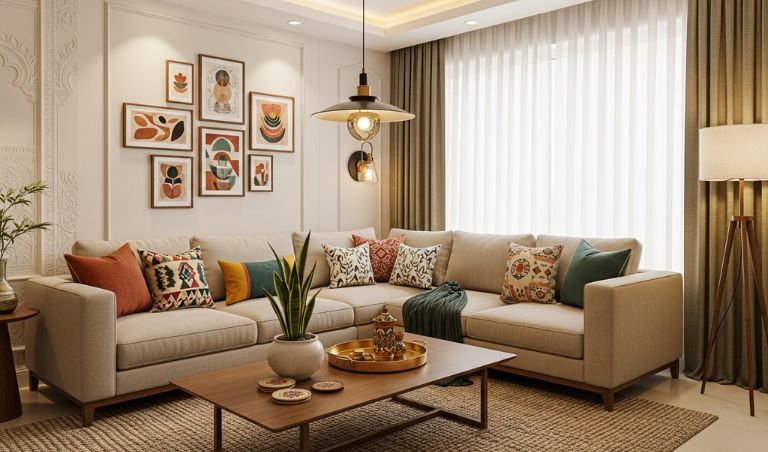
- A statement pendant over the dining table — 75–80 cm above the table surface for the right scale
- Cove lighting in the false ceiling — warm 2700K LED strips for an elegant glow
- Wall sconces flanking the bed instead of bedside table lamps
- Picture lights or directional spotlights on a feature wall, art piece, or plant
Focal lighting is what separates a hotel-suite feel from a regular bedroom. Pick one focal piece per room — more becomes cluttered.
5. Scale lighting to room size and ceiling height
Under-lit rooms feel cold; over-lit rooms feel like a showroom. The simple rule of thumb for ambient lighting:
- Living room: 20 lumens per sq ft
- Bedroom: 10–15 lumens per sq ft
- Kitchen: 30–40 lumens per sq ft (plus task lighting)
- Bathroom: 50–70 lumens per sq ft
- Study or workspace: 50 lumens per sq ft on the work surface
For a standard 150 sq ft bedroom, that means roughly 1,500–2,000 total lumens — a 9W LED ceiling fixture (around 800 lumens) plus two 5W bedside lamps gets you there.
For ceiling height: in rooms with 10 ft+ ceilings, use a hanging pendant or chandelier to bring the visual centre down. In standard 9 ft ceilings, recessed or surface fixtures work better.
Bonus: layer in natural light wherever possible
Even great artificial lighting cannot match daylight for mood and energy. Position seating near windows, use sheer curtains over heavy drapes during the day, and keep window walls free of bulky furniture. In south or west-facing Hyderabad homes, fit reflective film on the worst-affected windows to keep glare and heat down without losing light.
Pick a home with lighting designed in, not bolted on
Premium projects today plan lighting at the architectural stage — false ceiling depth for cove lights, dedicated task lighting points in the kitchen, dimmable circuits in the master bedroom. Auro Realty projects are built with these provisions on day one. See our live and ready-to-move homes in Hyderabad to compare lighting design across our portfolio.
Frequently Asked Questions
What are creative ways to improve home lighting?
Layer ambient, task, and accent lighting instead of relying on one ceiling fixture. Add dimmers to primary circuits, install cove lighting in false ceilings, use a statement pendant over the dining table, and add wall sconces or picture lights for focal interest. Pick LEDs with CRI 90+ and the right colour temperature for each room.
How does lighting impact the feel and functionality of a home?
Lighting changes how spacious a room feels, the comfort of every activity, and the visual quality of finishes and furniture. Warm 2700K layered lighting makes living areas feel cosy; bright 4000K task lighting in kitchens and studies improves focus. Dimmers let one space serve multiple moods.
What are energy-efficient lighting options for modern homes?
LEDs are the most efficient — about 80 percent less power than incandescent for the same lumens, with a 25,000-hour lifespan. Choose LED panels, downlights, strips, and bulbs from Philips, Wipro, Havells, or Syska. Pair with smart dimmers and motion sensors in passages and bathrooms for further savings.
How many lumens do you need per room?
Roughly 20 lumens per sq ft for living rooms, 10–15 for bedrooms, 30–40 for kitchens (plus task lighting), 50–70 for bathrooms, and 50 lumens per sq ft on work surfaces in studies. A standard 150 sq ft bedroom needs about 1,500–2,000 total lumens across all fixtures.