Real estate has historically been one of the slowest sectors to adopt new technology — but the last few years have changed that. Construction tech, building materials, project planning and even how a buyer experiences a property have all moved forward in ways that show up directly in the finished home. For premium developers in Hyderabad, this is what is shaping how the next generation of buildings is being built.
Major Indian cities — Hyderabad at the top of that list — are now using construction-grade technology to compress timelines, raise quality and extend the working life of a building. Below are four of the most consequential shifts.
How Technology Is Changing the Real Estate Industry
The technology shaping today’s real estate isn’t gimmicky — it’s the kind that quietly improves the everyday experience of living in a building, while making the structure itself last longer. These four areas have moved the needle the most.
1. Crystalline and Penetrative Waterproofing
Waterproofing is the single biggest determinant of how a building ages. Membrane-based systems can fail in 5 to 10 years, leaving cracks that allow seepage, rust in the steel and long-term structural damage. Crystalline waterproofing chemicals like Penetron, Xypex and Kryton penetrate into concrete and react with moisture to form insoluble crystals inside the capillary tracts. The result is a self-sealing waterproof barrier that actually gets stronger when exposed to water — and dramatically extends the lifespan of basements, terraces and wet areas. Auro Realty’s projects use these systems by default.
2. Smart-Home and Building Automation Systems
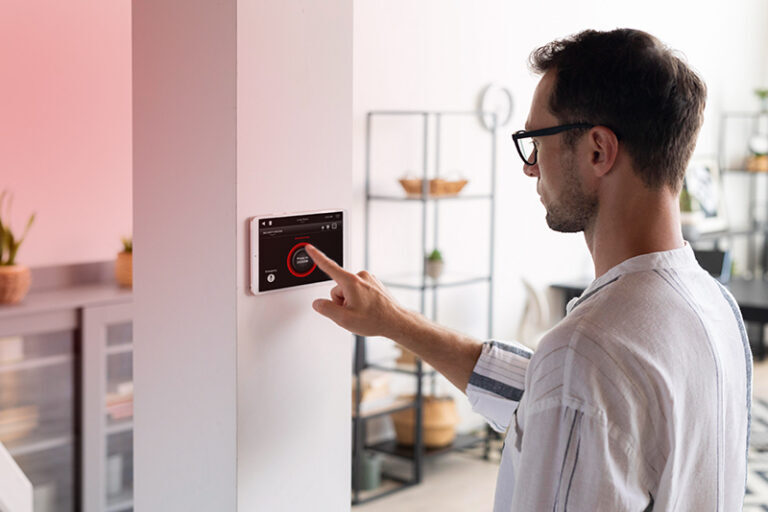
Smart-home tech has moved from premium add-on to baseline expectation. Modern projects ship with provisions for lighting automation, smart locks, video door phones, AC zoning, motorised curtains, intercom and unified app control. At the building level, automation also covers lifts, water pumping, common-area lighting, gas leak detection and fire systems — all monitored centrally. Lower energy bills, fewer breakdowns, and a building that genuinely behaves intelligently. For a deeper look at what to set up, see our smart home guide.
3. BIM, 3D Modelling and Construction Tech
Building Information Modelling (BIM) lets architects, engineers and contractors design and stress-test a project digitally before a single foundation is poured. Clashes between plumbing and electrical layouts get caught on screen, not on site. Combined with drone surveys, prefabricated components, MIVAN aluminium formwork and high-precision concrete pouring, this stack now compresses what used to be a 4-year build into 2.5–3 years — without sacrificing quality. The buyer benefits in two ways: faster handover and fewer post-handover defects.
4. Virtual Tours, AR and Digital-First Buying
The way Indian buyers shop for property has changed permanently. Detailed 3D walkthroughs, AR-based interior previews, drone-shot site videos and live virtual visits with relationship managers are now standard. NRI buyers can finalise a 4 BHK in HITEC City without flying down once. Digital agreements, online payment workflows and dashboard-based project tracking complete the loop. The friction that used to make buying real estate exhausting has shrunk significantly.
What This Means for Buyers
If you’re shortlisting a project today, ask the right tech-related questions. What waterproofing system was used in the basement and terrace? What smart-home provisions are pre-wired? What construction technology did the contractor use, and what’s the projected handover date? The developers that have invested in modern tech tend to deliver faster, ship fewer defects and produce buildings that simply last longer.
For more on what to look for in a modern Hyderabad project, our guide to investment hotspots is a good next read.