
Vastu tips for home office setups have become essential for remote professionals looking to boost productivity, focus, and career growth. Whether you are a freelancer, entrepreneur, or corporate employee working from home, the direction you face while working can influence your energy levels, concentration, and even financial outcomes. This guide covers the best Vastu-compliant directions, desk placements, furniture arrangements, and practical tips to transform your home office into a space that supports both your professional ambitions and personal well-being.
Vastu Shastra is a traditional Indian design philosophy passed down over centuries, not a scientifically validated system. The guidance below reflects classical Vastu principles for home offices. Many people find that a well-organised, well-lit, clutter-free workspace naturally supports focus and calm regardless of orientation — treat these recommendations as a framework to plan around, not a strict requirement for a productive home office.
Home Office Vastu at a Glance
| Element | Vastu Recommendation |
|---|---|
| Ideal room location | North, East or North-East zone of the home |
| Sitting direction while working | Face North or East |
| Desk placement | South-West corner of the room, with your back to a solid wall |
| Electronics & equipment | South-East zone |
| Lighting | Maximise natural light from the North or East; avoid working in dim corners |
| Storage & heavy furniture | South or West walls |
| Plants | North-East corner (e.g. money plant, bamboo) |
Understanding Vastu for Home Office
What is Vastu Shastra and Why It Matters for Your Workspace
Vastu Shastra is an ancient Indian architectural science that governs the design and spatial arrangement of buildings to promote harmony between people and their environment. Rooted in Vedic traditions, it draws on principles of geometry, astronomy, and directional alignments to channel beneficial energies within a space. When applied to a home office, these principles help optimize the flow of energy around your workspace, improving mental clarity, decision-making ability, and overall work performance. Office Vastu goes beyond just furniture placement — it encompasses the orientation of your room, the colors on your walls, the position of electronic devices, and even how natural light enters the space.
Why Remote Workers Should Follow Vastu Tips for Home Office
With remote working now a permanent reality for millions of professionals, your home office has become your primary career environment. Unlike traditional offices designed by architects who may incorporate spatial planning, home workspaces are often set up in spare bedrooms or corners without much thought to directional alignment. This is where vastu tips for home office design offer a structured framework. By following specific Vastu guidelines — from choosing which direction to face while working to positioning your desk and chair — you can create a workspace that actively supports productivity, reduces mental fatigue, and promotes financial stability. Homes with spacious layouts, such as well-designed 4 BHK apartments, provide the flexibility to position your office in the most Vastu-compliant zone.
Ideal Location for Your Home Office
The room you choose is the first and most impactful of all vastu tips for home office setup, as it sets the foundation for everything else. Here are Vastu-recommended guidelines for selecting the right spot:
- Best Rooms: The north, east, or northeast portion of your home is ideal for a home office. These zones receive morning sunlight, which naturally energizes the space and aligns with Vastu’s emphasis on harnessing solar energy for mental clarity. Facing these directions during work can also enhance leadership skills and team communication.
- Natural Light Priority: Choose a room with windows that allow ample sunlight. Natural light boosts serotonin levels, reduces eye strain, and aligns with Vastu’s principle that a well-lit workspace attracts prosperity.
- Locations to Avoid: Do not set up your office near bathrooms, kitchens, or under staircases. These areas are considered energy-draining zones in Vastu and can disrupt concentration. The bedroom is also not ideal — if unavoidable, use a partition to separate the work area from the sleeping space.
- The Northwest Advantage: If north or east rooms are unavailable, the northwest corner is a secondary option, as it is associated with career opportunities and networking luck.
Best Direction to Face While Working: A Complete Vastu Guide
Which Direction to Face While Working from Home
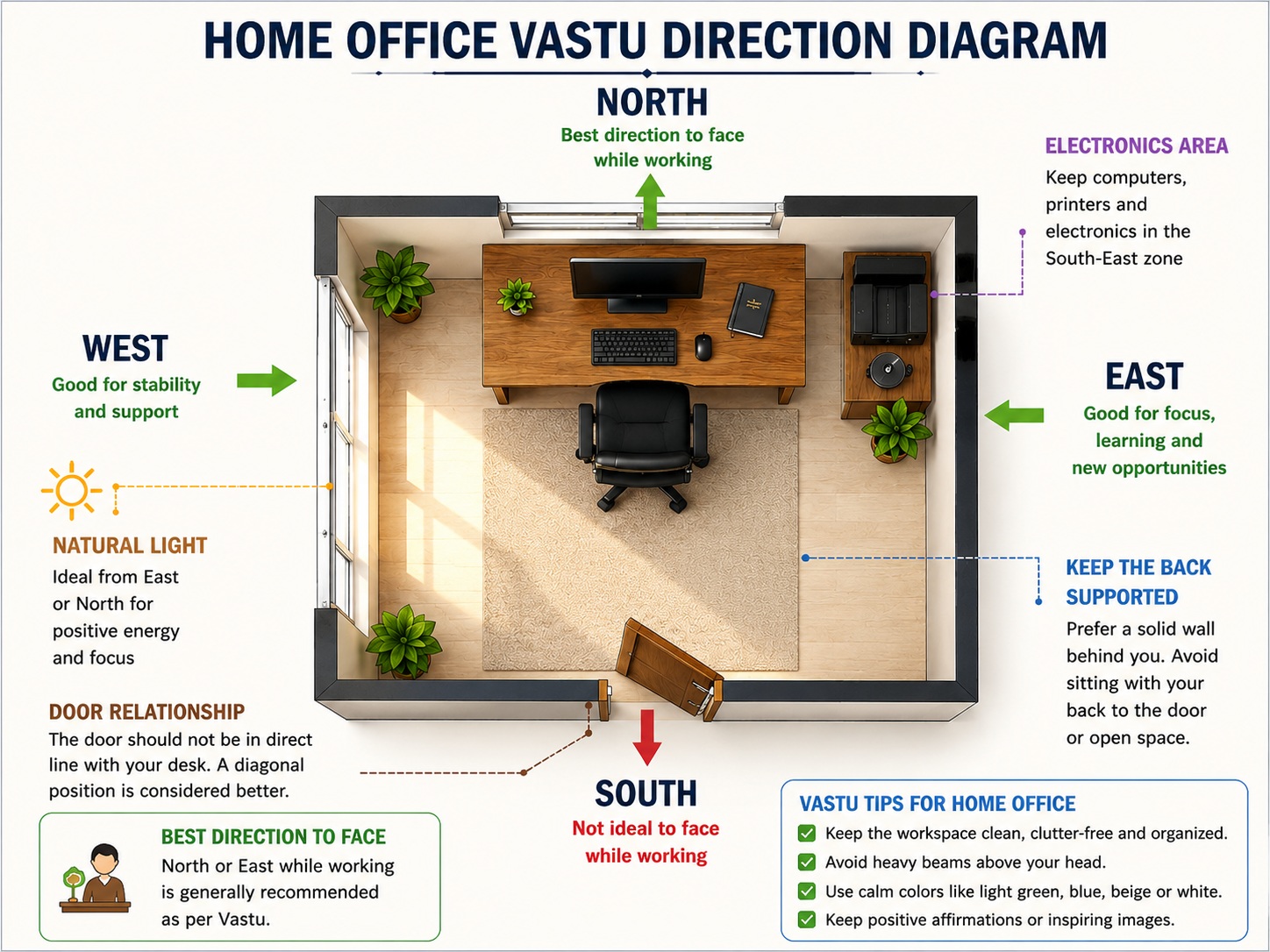
According to Vastu Shastra, you should sit facing North or East while working from home. Facing North is associated with career growth and opportunity, while facing East is linked to clarity, learning and mental focus — both are considered favourable for concentration and decision-making. Facing South or West while working is generally avoided, as these directions are believed to work against sustained focus.
The direction you face while working is one of the most impactful vastu tips for home office productivity. Each cardinal direction carries specific energetic qualities that can influence your work output, financial results, and mental state. Here is a direction-by-direction breakdown:
- North (Best for Financial Growth): North is governed by Kuber, the deity of wealth in Hindu tradition. Facing north while working is particularly recommended for professionals in finance, sales, accounting, and business development. This direction is believed to attract monetary opportunities and support strategic thinking.
- East (Best for Creativity and New Ventures): East is the direction of the rising sun and is associated with fresh beginnings, innovation, and intellectual energy. If your work involves creative problem-solving, marketing, writing, or design, facing east can help spark new ideas and maintain enthusiasm throughout the day.
- Northeast (Most Auspicious Overall): The northeast direction combines the financial benefits of north with the creative energy of east, making it the most universally recommended direction in Vastu for home offices. Entrepreneurs, startup founders, and professionals seeking both career growth and financial stability should prioritize this direction.
- South (Use with Caution): South-facing work positions are generally not recommended in Vastu, as this direction is linked to increased stress, conflicts, and decreased motivation. However, senior leaders and those in authoritative roles may find that south can support name recognition and industry prestige — though it should be balanced with appropriate Vastu remedies like placing a Vastu pyramid.
- West (Moderate — Good for Stability): Facing west is acceptable for professionals seeking job stability and consistent income, especially in industries like IT support, operations, and administration. However, it is not the first choice for those seeking rapid career advancement.
Office Sitting Direction as per Vastu: Quick Comparison
| Facing Direction | Vastu Association | Notes |
|---|---|---|
| North | Career growth, new opportunities | Considered the most favourable direction for professionals and business owners |
| East | Clarity, learning, mental focus | Well suited to writers, students, analysts and detail-heavy work |
| North-East | Calm, wisdom | Good for planning and decision-making, less ideal for high-output daily work |
| West | Steady, methodical output | Acceptable when North or East isn’t possible in the room’s layout |
| South | Considered less favourable for daily desk work | Not “bad” outright — if South is the only option, offset it with strong lighting, a decluttered desk and a solid wall behind you |
Direction Recommendations by Profession
Vastu guidance becomes more actionable when tailored to your specific profession. Entrepreneurs and business owners benefit most from facing north or northeast, as these directions support deal closures and revenue growth. Creative professionals such as designers, writers, and architects should orient their desks toward the east to tap into the sun’s rejuvenating energy. Managers and team leaders can face north for better strategic decision-making, while those in teaching or consulting roles often find east-facing setups enhance their communication and persuasion abilities.
Furniture Arrangement and Color Palette

Once you have identified the best direction to face while working, the next step is arranging your furniture and selecting colors that reinforce the Vastu energy of your workspace.
- Office Table Direction as per Vastu: Your desk should be rectangular with solid back support. Place it so you face north or east while seated. Avoid L-shaped desks, glass tabletops, and irregularly shaped tables, as these are associated with scattered energy and distraction in Vastu tradition.
- Work Desk Placement: Position your desk in the southwest zone of the room, but orient your seating so you face northeast. This combination places the weight and stability of the southwest behind you (symbolizing support) while your gaze captures the beneficial energy of the northeast. This arrangement is especially recommended for entrepreneurs and sales professionals.
- Chair and Seating: Use a high-backed chair that provides firm support. In Vastu, a solid wall directly behind your seating position represents stability and protection. Avoid sitting with your back to a door or window, as this creates a sense of vulnerability and distraction.
- Vastu Color Palette for Home Office Walls: Light, calming colors are recommended — off-white, cream, pale yellow, and light green promote clarity and calmness. Avoid dark reds, blacks, or very bold colors on office walls, as these can create restlessness. Pair wall colors with natural wooden furniture for a grounded, balanced aesthetic.
- Electronics Placement: Keep electronic devices like computers, printers, and chargers on the southeast side of your desk. This zone, governed by the fire element in Vastu, naturally complements electrical equipment and prevents energy imbalances.
Office Desk Placement Tips for Maximum Productivity
Beyond direction, one of the most practical vastu tips for home office success is the specific positioning of your desk within the room. Ensure your desk is not pushed against a wall that you face directly — this symbolizes blocked progress. Instead, maintain a small gap between the desk and the wall, or position the desk so you have an open view of the room. Having a clear line of sight to the door is considered auspicious, as it represents awareness of incoming opportunities. A solid wall behind your chair provides a sense of backing and support, which Vastu associates with career stability and strong professional relationships.
Lighting and Ventilation in Your Home Office

When reviewing vastu tips for home office design, remember that proper lighting and ventilation are not just comfort factors — they are core Vastu requirements for a thriving workspace.
- Natural Light: Position your desk near an east- or north-facing window to benefit from morning sunlight. In Vastu, sunlight represents vitality and clarity. Offices that receive adequate natural light tend to foster better focus and reduce afternoon energy slumps.
- Artificial Lighting: Use warm, soft-toned lighting for your workspace. Avoid harsh fluorescent tubes, which can cause eye strain and create an agitated atmosphere. A desk lamp with warm white LED light is an excellent complement to natural daylight.
- Ventilation and Air Flow: Ensure cross-ventilation in your office by keeping windows on at least two sides unobstructed. Stale air accumulates stagnant energy in Vastu, so fresh air circulation is vital for maintaining mental sharpness.
- Air-Purifying Plants: Incorporate indoor plants like peace lilies, snake plants, or bamboo palms in the northeast or east corner of your office. These plants improve air quality while also representing the wood element in Vastu, which supports growth and renewal.
Creating a Productive Workspace with Vastu
Following vastu tips for home office design means making intentional choices that support both physical comfort and energetic balance. Here are five actionable strategies rooted in Vastu principles:
- Orient Your Desk Correctly: As discussed, face east or north while working. The east direction captures the rising sun’s energy, which Vastu links to new beginnings and creative momentum. For financial roles, north remains the strongest choice.
- Invest in Ergonomic, Vastu-Friendly Furniture: Choose a rectangular wooden desk and a supportive high-backed chair. Avoid metal or glass furniture, which Vastu considers less grounding. The natural warmth of wood promotes calmness and sustained concentration.
- Maximize Natural Light: A workspace near a window that receives 4-6 hours of natural light aligns with Vastu’s emphasis on solar energy. If natural light is limited, use full-spectrum LED bulbs that mimic daylight.
- Maintain a Clutter-Free Environment: Vastu strongly emphasizes that clutter blocks the flow of positive energy. Keep your desk surface clear of unnecessary items, file papers in designated drawers, and use organizers for stationery and cables. A clean workspace signals readiness and invites productivity.
- Introduce Greenery: Place small potted plants in the east or northeast zone of your office. Money plants, tulsi, or jade plants are considered especially auspicious in Vastu for attracting prosperity and maintaining a fresh, oxygenated workspace.
Decluttering and Organizing Your Workspace

Among all vastu tips for home office design, keeping a clutter-free workspace is one of the most emphasized principles. Stagnant piles of paper, tangled cables, and disorganized drawers are believed to trap energy and create mental fog. Here is how to declutter effectively:
- Weekly Desk Reset: Dedicate 15 minutes every Friday to clearing your desk completely. Remove items that do not serve your daily workflow and return them to storage.
- Vastu-Compliant Storage Placement: Place storage units — shelves, filing cabinets, and drawers — in the western or southwestern portion of your office. According to Vastu, these heavier elements belong in the south-west zone, providing grounding energy. Ensure cabinet doors open toward the north, east, or northeast to facilitate the free flow of beneficial energy.
- Minimalist Approach: Adopt a minimalist workspace style where only essential items remain visible — your computer, a notebook, a pen, and perhaps a small plant. Everything else should be stored out of sight.
- Separate Activity Zones: If space permits, create distinct zones for focused work, video calls, and brainstorming. This physical separation helps your brain switch between different work modes more efficiently, while also maintaining organized energy flow throughout the room.
Digital Vastu Tips for Modern Home Offices
These vastu tips for home office technology setups address the modern workspace dominated by screens, cables, and digital devices. Here is how to apply Vastu principles to your tech setup:
- Computer and Monitor Placement: Position your primary screen so that you face north or east while using it. Keep the CPU, router, and other electronic hardware in the southeast corner of your desk or room, as this zone governs the fire element and naturally complements electrical equipment.
- Cable Management: Tangled cables represent chaotic energy in Vastu. Use cable organizers, clips, or a cable management tray to keep wires neat and hidden. This small change can significantly improve the visual and energetic cleanliness of your workspace.
- Desktop and Digital Organization: Maintain a clean digital desktop as well. Delete unnecessary files, organize folders with clear naming conventions, and keep only essential shortcuts visible. A cluttered digital workspace mirrors a cluttered physical one.
- Balancing Technology with Natural Elements: Offset the electromagnetic dominance of electronics by placing natural elements nearby — a small wooden photo frame, a terracotta pot with a plant, or a crystal paperweight. This balance of fire (electronics) and earth (natural materials) creates a harmonious workspace energy.
- Good Luck Enhancers: Place a small globe in the northwest corner of your desk to attract international work opportunities and networking luck, a well-known Vastu remedy for career expansion.
7 Key Benefits of Applying Vastu to Your Home Office
Implementing vastu tips for home office spaces is not just about following tradition — it delivers tangible improvements to your daily work life:
- Improved Productivity: Facing the correct direction (north or east) while working reduces mental resistance and helps you enter a state of flow more easily, leading to higher output and fewer distractions.
- Enhanced Creativity: East-facing desks, combined with natural light and indoor plants, create an environment that stimulates innovative thinking and problem-solving abilities.
- Reduced Work Stress: A clutter-free, well-ventilated, and properly oriented workspace lowers cortisol levels and promotes a calm, focused mental state throughout the workday.
- Better Work-Life Balance: By creating a dedicated, Vastu-compliant workspace separate from your living and sleeping areas, you establish a clear boundary between professional and personal time, reducing burnout.
- Financial Growth: North-facing work positions, combined with proper desk placement in the southwest zone of the room, are traditionally associated with attracting wealth and business opportunities.
- Career Advancement: Consistent application of Vastu principles — from direction to colors to decluttering — signals discipline and intentionality that often correlates with professional growth.
- Improved Physical Health: Good lighting, air-purifying plants, and proper ventilation (all Vastu recommendations) directly contribute to better eye health, respiratory function, and overall energy levels during long work hours.
Conclusion
Applying vastu tips for home office design is a practical, time-tested approach to building a workspace that supports your career ambitions. The direction you face while working, the placement of your desk, the colors on your walls, and even how you organize your cables — all of these factors contribute to the energetic quality of your workspace. Start with the highest-impact change: orient your desk so you face north or east. Then gradually implement the furniture, lighting, and decluttering recommendations outlined in this guide. Whether you work from a compact study or a spacious room in a well-designed apartment, these vastu tips for home office spaces can help you unlock greater productivity, creativity, and professional success from the comfort of your home.
Official Resources & References: For verified information, visit RERA Telangana, NASSCOM.
Related Reading
- Vastu Tips to Boost Positive Energy at Home: Room-by-Room Guide
- Color Psychology for Home: Room-by-Room Paint Guide
- Luxury Balcony Design Ideas for Indian Apartments
- Benefits of Living Close to Work
- Vastu Shastra Interior Décor: 3 Tips for a Harmonious Home
FAQs
Which direction should I face while working from home according to Vastu?
North or East are considered the most favourable directions to face while working, as they’re associated with career growth, clarity and focus in Vastu Shastra.
Where should I place my desk in a home office as per Vastu?
The South-West corner of the room is considered the ideal spot for a desk, with a solid wall behind you for support and stability while you work.
Which direction is best for a home office room?
A home office located in the North, East or North-East zone of the house is generally preferred in Vastu, as these directions are associated with growth and clarity.
Where should electronic equipment be placed in a home office?
Computers, routers, printers and other electronics are best placed in the South-East zone, which Vastu associates with energy and power.
Is it bad to face South while working?
South isn’t considered ideal, but it isn’t unworkable either. If your room’s layout only allows a South-facing desk, good lighting, a clutter-free surface and a solid wall behind you can help offset it.
Can I keep plants in my home office as per Vastu?
Yes. Plants like money plant or bamboo are considered auspicious in the North-East corner of a home office, as this zone is associated with calm and clarity.
Does Vastu for a home office differ from Vastu for a commercial office?
The core direction and placement principles are similar, but a home office is a smaller, single-user space, so the guidance here focuses specifically on desk position, sitting direction and equipment placement within a room in your home.


